
Young Americans (1975) – The Story Behind the Album Cover
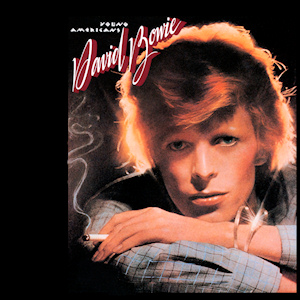
Image: David Bowie World collection / editorial use
Released in 1975, Young Americans introduced yet another completely different David Bowie image. Gone were the dystopian theatrics of Diamond Dogs. In their place stood a sharply dressed, sophisticated Bowie inspired by soul music, Hollywood glamour photography and American style.
The famous cover portrait — shadowy, elegant and heavily stylised — became one of Bowie’s most cinematic sleeve images. Photographed by Eric Stephen Jacobs, the sleeve reflected Bowie’s transition into what he later described as his “plastic soul” period.
- Album: Young Americans
- Released: 7 March 1975
- Photographer: Eric Stephen Jacobs
- Cover designer: Craig DeCamps (RCA)
- Main inspiration: Toni Basil’s After Dark magazine cover
- Photo shoot location: Los Angeles movie studio sound stage
- Visual style: Hollywood glamour / soul-era sophistication
- Related unused concept: The Gouster sessions
A completely new Bowie
By 1974, Bowie was already famous for constant reinvention, but Young Americans still surprised audiences.
The album moved away from glam rock and toward soul, rhythm and blues and American studio sophistication. Bowie immersed himself in Philadelphia soul music and recorded large parts of the album at Sigma Sound Studios in Philadelphia.
The cover needed to reflect that transformation. Instead of an alien rock star or theatrical dystopian figure, Bowie now appeared elegant, cinematic and emotionally restrained.
The Toni Basil inspiration
The visual idea for the sleeve began when Bowie saw a portrait of choreographer and performer Toni Basil on the cover of After Dark magazine in September 1974.
The image had been photographed by Eric Stephen Jacobs using dramatic backlighting and hand-tinted colouring techniques inspired by classic Hollywood photography.
Bowie immediately decided he wanted the same visual atmosphere for his next album cover.
Eric Stephen Jacobs and the photoshoot
Bowie personally contacted photographer Eric Stephen Jacobs and arranged a photo session in Los Angeles during the Diamond Dogs / Young Americans transition period.
The shoot took place on a movie-studio sound stage in August 1974.
Jacobs later explained that Bowie wanted the image to resemble the Toni Basil After Dark portrait as closely as possible, including the glamorous lighting, cigarette smoke and old-Hollywood atmosphere.
The famous backlighting
One of the sleeve’s defining features is the dramatic backlighting surrounding Bowie’s face and hair.
The image feels soft and cinematic rather than aggressive. Bowie appears almost suspended inside shadow and smoke.
That elegant atmosphere represented a complete visual break from the chaotic urban imagery of Diamond Dogs.
The hand-coloured photograph
Like the Toni Basil magazine portrait that inspired it, the Young Americans sleeve was heavily retouched and hand-coloured.
Jacobs used translucent oil colours to tint the monochrome image, creating the warm golden tones and soft cinematic texture visible on the final sleeve.
Even the cigarette smoke was painted in by hand afterwards.
The famous patterned shirt
Bowie wore a flamboyant patterned shirt during the session, chosen by his wardrobe team.
Interestingly, Jacobs later admitted that he personally disliked the shirt because the busy pattern complicated the image visually.
Despite that, the final portrait became iconic partly because of the tension between glamour and slight visual excess.
Craig DeCamps and RCA design
The final sleeve packaging was assembled by Craig DeCamps at RCA Records in New York.
The design framed Jacobs’ portrait in a simple black photo-border style that made the image feel almost like a treasured old Hollywood publicity photograph.
That subtle design approach helped emphasise sophistication and mood over spectacle.
The abandoned Norman Rockwell idea
Before working with Jacobs, Bowie had originally hoped to commission legendary American illustrator Norman Rockwell to create the album cover.
Bowie personally telephoned Rockwell, but the artist required far more time to complete portrait work than Bowie was willing to wait.
The idea was abandoned, although the interest itself reveals how strongly Bowie wanted Young Americans to feel connected to American visual culture.
The Gouster sessions
After the main album-cover shoot, Bowie and Jacobs collaborated on a second highly stylised photo session connected to an abandoned project called The Gouster.
These photographs showed Bowie in front of an American flag wearing a flying suit and holding symbolic objects including a glass of milk.
The imagery explored exaggerated “Americana” themes and Depression-era symbolism. Although unused at the time, many of the photographs eventually appeared decades later when The Gouster was officially released in the 2016 box set Who Can I Be Now? (1974–1976).
A bridge between eras
The Young Americans cover occupies a fascinating place in Bowie’s visual history.
It still contains traces of the theatrical Bowie from the glam years, but the image is far more mature, restrained and emotionally controlled.
At the same time, hints of the colder, sharper Thin White Duke persona already begin to emerge beneath the soul-inspired elegance.
One of Bowie’s most cinematic sleeves
Unlike many Bowie covers built around shock or transformation, the power of Young Americans lies in atmosphere.
The sleeve feels less like a rock album and more like a still image from an old American film.
That cinematic quality helped make the album one of Bowie’s most visually sophisticated releases of the 1970s.
The Original Back Cover
The Original Back Cover

Image: David Bowie World collection / editorial use
The original back cover of Young Americans was considerably more restrained than the glamorous front sleeve.
Rather than featuring another major portrait image, the back cover focused mainly on typography, credits and track information.
Its relatively minimal presentation helped keep attention on the dramatic Eric Stephen Jacobs front-cover portrait, which remained the central visual statement of the album packaging.
The clean RCA design still matched the elegant and sophisticated atmosphere of Bowie’s soul-era transformation during the mid-1970s.
Legacy
Today, the Young Americans cover is regarded as one of Bowie’s most elegant and understated sleeve designs.
It captured Bowie during a moment of artistic transition: leaving glam rock behind while moving toward soul music, American imagery and eventually the Thin White Duke era.
More than simply a portrait, the sleeve became a visual declaration that Bowie could reinvent himself endlessly without losing his identity.
Article origin
This page was created using historically verified information surrounding the creation of the Young Americans sleeve, including documented interviews with photographer Eric Stephen Jacobs, RCA design information, Bowie archive material and historical accounts of the 1974 Los Angeles photo sessions.
Additional historical context was drawn from documented material concerning the abandoned Norman Rockwell concept, the Toni Basil After Dark inspiration and the later The Gouster sessions released in the Who Can I Be Now? (1974–1976) box set.