David Bowie and The Netherlands – The Forgotten Beginning (1969)
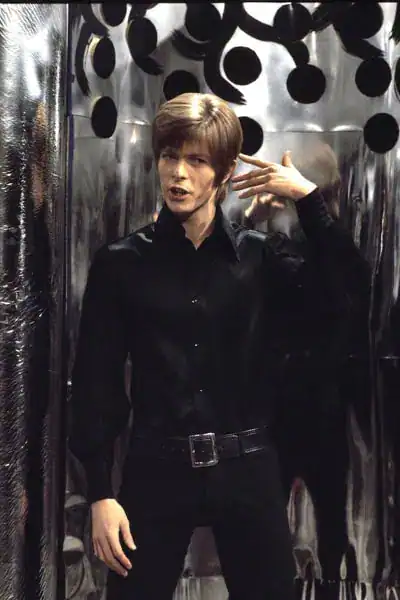
Photo: To be added / Editorial use
The Netherlands may have been the first country outside the United Kingdom to welcome David Bowie. Long before Ziggy Stardust, worldwide fame or sold-out tours, Bowie arrived in the Netherlands as a young and largely unknown artist searching for recognition beyond Britain.
Between Bussum, Amsterdam and Hilversum, Bowie took some of his earliest international steps through Dutch television, radio interviews and promotional appearances connected to Love You Till Tuesday and later Space Oddity. What seemed modest at the time would later become an important — and often forgotten — chapter in Bowie history.
From the awkward Fenklup appearance in 1967 to the Doebidoe-oe-oe television performance in 1969, the Netherlands quietly played a role in Bowie’s transformation from uncertain newcomer into one of music’s most visionary artists.
- Main years: 1967 & 1969
- Country: The Netherlands
- First Dutch appearance: Fenklup (1967)
- First performance outside UK: Bussum
- Main songs: Love You Till Tuesday & Space Oddity
- Main locations: Bussum, Amsterdam & Hilversum
- Key TV appearance: Doebidoe-oe-oe (1969)
- Manager during Dutch visits: Kenneth Pitt
- Historical significance: Bowie’s earliest international breakthrough steps
Before The World Knew David Bowie
In 1969, David Bowie was still far removed from international superstardom. Although he had already spent years experimenting with music, mime, folk influences and theatrical ideas, commercial success remained limited. Record companies viewed him as talented but difficult to define, while audiences were often unsure what to make of his unusual appearance and artistic direction.
Everything slowly began changing with the release of Space Oddity. The song’s connection to the Apollo 11 moon landing created international curiosity around Bowie, helping introduce him to listeners outside Britain for the very first time.
The Netherlands quickly became one of the countries where Bowie’s music, personality and visual style started attracting serious attention. But the Dutch connection had already begun two years earlier, in a setting that was much less glamorous than Bowie’s later reputation would suggest.
The Earlier Dutch Connection – Fenklup (1967)
In 1967, Dutch television still had only a small number of youth music programmes, and one of the most popular was Fenklup, originally connected to the more English-sounding title Fanclub. The programme ran during the second half of the 1960s and introduced Dutch viewers to young artists, beat groups and international acts who were either already famous or just beginning to break through.
The Netherlands was sometimes seen by record companies as a useful testing ground for international talent. If an artist could generate attention there, it suggested that a wider European audience might also be possible. For a young David Bowie, still only twenty years old and without a major breakthrough, such a promotional opportunity mattered.
When Phonogram released Love You Till Tuesday in the Netherlands, Bowie’s manager Kenneth Pitt saw a chance to promote the single on Dutch television. Phonogram arranged the appearance, and Bowie travelled to the Netherlands for what would later be remembered as one of his earliest performances outside Britain.
📅 1967-11-08
📍 Bussum / Hilversum area, 🇳🇱 Netherlands
🏛️ Studio Concordia, Bussum (TV recording – Love You Till Tuesday (solo performance) – First performance outside the UK – TV programme: Fenklup)
🎤 Performer: David Bowie (solo)
🎵 Song: Love You Till Tuesday
The recording took place at Studio Concordia in Bussum, with Bowie appearing among a varied group of Dutch and international performers. The programme was associated with Ralph Inbar, while Rudy Bennett, lead singer of The Motions, acted as presenter for that episode.
Jan Corduwener And Bowie’s First Dutch Arrival
Bowie’s arrival in the Netherlands was modest. There were no crowds of journalists, no limousines, and no superstar treatment. Jan Corduwener, then working as a promoter for Phonogram, reportedly collected Bowie from Schiphol Airport himself. That simple act would later gain a special place in Bowie history.
Corduwener later remembered Bowie as a polite and well-mannered young man. During the visit, Bowie mentioned his interest in antiques, after which Corduwener took him to Naarden-Vesting. Bowie reportedly walked around quietly and even bought a small object, possibly a vase. It was a humble moment, far removed from the mythic Bowie image that would emerge in the 1970s.
Bowie would later refer to Corduwener as the man who first brought him abroad. Whether understood at the time or only in retrospect, that Dutch visit marked an important early step in Bowie’s movement beyond Britain.
A Confusing First Impression
The Fenklup performance did not feel like a triumph at the time. Bowie was not yet the confident, theatrical figure the world would soon know. He was a young British singer with an unusual look, performing a gentle, folk-influenced pop song in a television studio filled with musicians who did not quite know what to make of him.
According to later recollections from Rudy Bennett, some of the musicians present reacted with amusement while Bowie performed. His tight trousers, body language and delicate stage presence seemed strange beside the tougher beat and blues acts of the period. Bennett later suggested that Bowie may not have realised how some people in the studio were reacting, although the awkward atmosphere was visible to others.
The song Love You Till Tuesday itself also worked against him in that setting. Compared with the rawer sounds associated with many late-1960s pop and blues acts, it could seem light, theatrical and slightly out of place. Yet that very awkwardness is what makes the performance so fascinating today.
What looked uncertain in 1967 now reads as a glimpse of an artist still forming his identity. The studio audience could not know that the young man being quietly underestimated would soon become one of the most influential performers of the twentieth century.
Amsterdam – August 1969
Two years later, Bowie returned to the Netherlands during an important promotional trip connected to the release of Space Oddity. By then, the song had begun attracting international attention following the Apollo 11 moon landing and growing European radio airplay.
📅 1969-08-23
📍 Amsterdam, 🇳🇱 Netherlands
🏛️ Hotel Ardina, Keizersgracht 268 (Arrival in Amsterdam. Interview for Het Parool.)
🎤 Performer: David Bowie (solo)
🎵 Song: Space Oddity
Amsterdam in 1969 was one of Europe’s most progressive cultural capitals. Psychedelic culture, underground music, alternative fashion and artistic experimentation flourished throughout the city. In many ways, the Dutch capital was perfectly suited for an artist like Bowie, whose work already challenged conventional ideas of pop music and identity.
During his stay, Bowie reportedly conducted interviews with Dutch journalists, including coverage connected to Het Parool. Although some details from the trip remain difficult to fully document decades later, the visit has become part of early Bowie history in the Netherlands.
Hilversum – Dutch Radio And Television
After Amsterdam, Bowie continued travelling through Hilversum, the centre of Dutch broadcasting. Here he encountered some of the most influential radio and television platforms in the country.
Dutch media often embraced experimental international music earlier than many broadcasters elsewhere in Europe. Radio Veronica in particular played an important role in introducing younger audiences to new artists emerging from Britain and America.
📅 1969-08-24
📍 Hilversum, 🇳🇱 Netherlands
🏛️ Radio Hilversum / Radio Veronica (Radio interviews)
🎤 Performer: David Bowie (solo)
🎵 Song: Space Oddity
Bowie’s Dutch promotional journey then continued with one of his most important early television appearances outside Britain.
📅 1969-08-25
📍 Hilversum, 🇳🇱 Netherlands
🏛️ NTS Studio 2 (AVRO TV recording – Doebidoe-oe-oe)
🎤 Performer: David Bowie (solo)
👤 Manager present: Kenneth Pitt
🎵 Song: Space Oddity
Doebidoe-oe-oe — The Historic Dutch Broadcast
One of the most important moments from Bowie’s early Dutch visits took place during the recording of the television programme Doebidoe-oe-oe, broadcast by AVRO television in August 1969.
The programme aired on Dutch television channel Nederland 1 on Saturday 30 August 1969 at 19:07 and was presented by Dutch broadcaster Chiel van Praag. The show was transmitted in colour, still a notable detail for European television during the late 1960s.
The recording itself took place at NTS Studio 2 in Hilversum, the centre of Dutch broadcasting. Bowie performed a playback version of Space Oddity, accompanied during the Dutch promotional trip by his manager Kenneth Pitt.
📅 1969-08-30
📍 Hilversum, 🇳🇱 Netherlands
🏛️ Nederland 1 / AVRO television broadcast – Doebidoe-oe-oe (recorded at NTS Studio 2, Hilversum)
🕖 Broadcast time: 19:07
🎨 Broadcast in: Color
🎤 Performer: David Bowie (solo)
🎤 Presenter: Chiel van Praag
👤 Manager present: Kenneth Pitt
🎵 Song: Space Oddity
Earlier that same week, Bowie and Pitt had travelled from Amsterdam to Hilversum after Bowie’s arrival and press activities in the Dutch capital. The Dutch television appearance became one of Bowie’s earliest major broadcasts outside the United Kingdom and remains an important document from the period immediately before his international breakthrough.
The Netherlands And Bowie’s European Beginning
Bowie’s relationship with the Netherlands is often overshadowed by later chapters in America, Germany and Japan. Yet the evidence strongly suggests that Dutch journalists, television producers and radio stations belonged to the very first outside Britain to seriously engage with his work.
Long before sold-out world tours and global superstardom, Bowie was still a young experimental artist travelling through Bussum, Amsterdam and Hilversum, performing songs that many people did not yet fully understand.
That is precisely what makes these Dutch appearances so historically fascinating today. They capture Bowie during the uncertain transitional period before fame arrived, when his future remained completely unpredictable.
“The Netherlands may have been the first country outside the United Kingdom to truly welcome David Bowie.”
Before Ziggy Stardust. Before America. Before worldwide fame. There was the Netherlands.