Beckenham Arts Lab – The Creative Hub That Shaped Early David Bowie
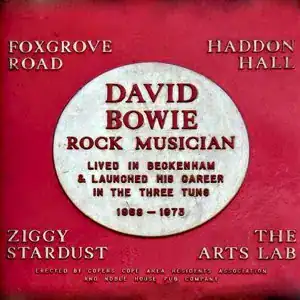
Image: David Bowie World collection / editorial use
The Beckenham Arts Lab was a late-1960s creative collective that became one of the most important early environments in David Bowie’s artistic life. More than a single venue or simple folk club, it functioned as a cultural laboratory where music, poetry, mime, theatre, visual art and countercultural ideas could meet.
At a time when Bowie was still searching for his artistic identity, the Arts Lab gave him the freedom to experiment without the pressures of the commercial music industry. That experience helped shape the fearless reinvention that later became central to his career.
- Founded: 1969, developed from the “Growth” Folk Club
- Location: The Three Tuns, Beckenham High Street, South London
- Type: Countercultural arts collective / folk club / performance space
- Key figures: David Bowie, Mary Finnigan, Barrie Jackson, Christina Ostrom
- Bowie connection: Co-organizer, performer and creative catalyst
- Most famous event: Beckenham Free Festival / Growth Summer Festival, 16 August 1969
Origins of the Arts Lab
The Beckenham Arts Lab grew out of a Sunday folk club originally known as Growth, held at The Three Tuns public house on Beckenham High Street. In early 1969, Bowie was living in the Beckenham area and became closely involved with journalist Mary Finnigan, alongside Barrie Jackson and Christina Ostrom.
What began as a folk club quickly developed into something broader. The sessions attracted musicians, poets, visual artists, performers and curious locals, turning a room at the back of a pub into one of the most important small-scale creative spaces in Bowie’s early life.
Mary Finnigan and the shared creation of the Lab
A crucial force behind the Arts Lab was Mary Finnigan, who co-founded the venture with Bowie and helped shape its communal, countercultural spirit.
If Bowie brought artistic restlessness and charisma, Finnigan brought organisation, social vision and practical momentum. The Beckenham Arts Lab was therefore not simply “Bowie’s club”, but a shared creation rooted in friendship, experiment and local counterculture.
A laboratory for experimentation
What made the Arts Lab extraordinary was its openness. Events could combine acoustic performances, poetry readings, light shows, theatrical sketches, visual art and improvised happenings. Bowie thrived in this environment, using it to test ideas about performance, persona and audience connection long before Ziggy Stardust.
These early performances revealed a trait that would define his entire career: the refusal to treat music as an isolated medium. At Beckenham, music was part of a larger artistic language.
The Three Tuns and the local scene
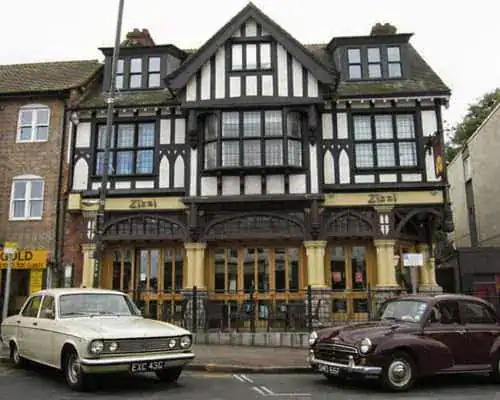
Photo: Unknown photographer / Wikimedia Commons / CC BY-SA 4.0 (editorial use)
The Three Tuns became the symbolic home of this Beckenham period. Its back-room folk club atmosphere gave Bowie a local platform at a time when his national career remained uncertain.
The venue’s importance lies not in glamour, but in intimacy. It gave Bowie a place to perform, organise, listen, meet other artists and develop confidence as a cultural instigator rather than simply a singer-songwriter.
The Beckenham Free Festival
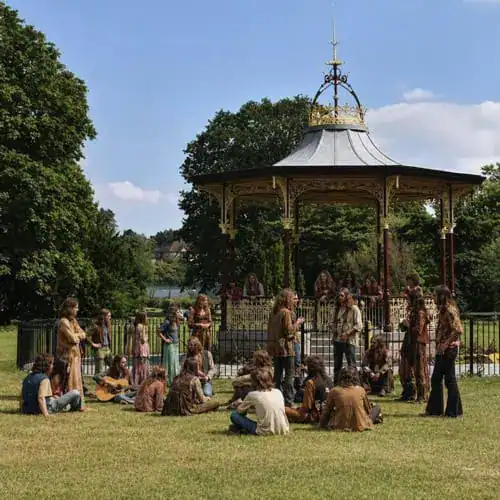
Image: David Bowie World collection / editorial use
The Lab’s most legendary achievement was the Beckenham Free Festival, also known as the Growth Summer Festival, held on 16 August 1969 at Croydon Road Recreation Ground, Beckenham. Bowie helped organise and compère the event and also performed there.
Hundreds — and by some accounts several thousand — attended, transforming the park into a temporary countercultural gathering of music, art and communal celebration.
The festival later inspired Bowie’s song Memory of a Free Festival, which transformed the real event into a dreamlike reflection on optimism, community and the passing of the 1960s.
Memory of a Free Festival
Memory of a Free Festival is one of the clearest artistic traces of Bowie’s Beckenham period. Rather than documenting the festival literally, the song turns it into myth: summer light, communal hope and the fragile innocence of a moment that could not last.
That transformation is important. Bowie was already learning how to turn lived experience into theatrical and emotional narrative — a skill that would later become central to his greatest work.
Community and collaboration
Unlike the hierarchical structure of the commercial music industry, the Arts Lab encouraged collaboration over competition. Bowie worked alongside dancers, experimental musicians, poets, theatre performers and visual artists, broadening his understanding of what live performance could become.
This communal mindset helped Bowie move from aspiring singer-songwriter toward multidisciplinary artist. The Beckenham period taught him that songs could be surrounded by atmosphere, image, story and social ritual.
From Beckenham to Haddon Hall
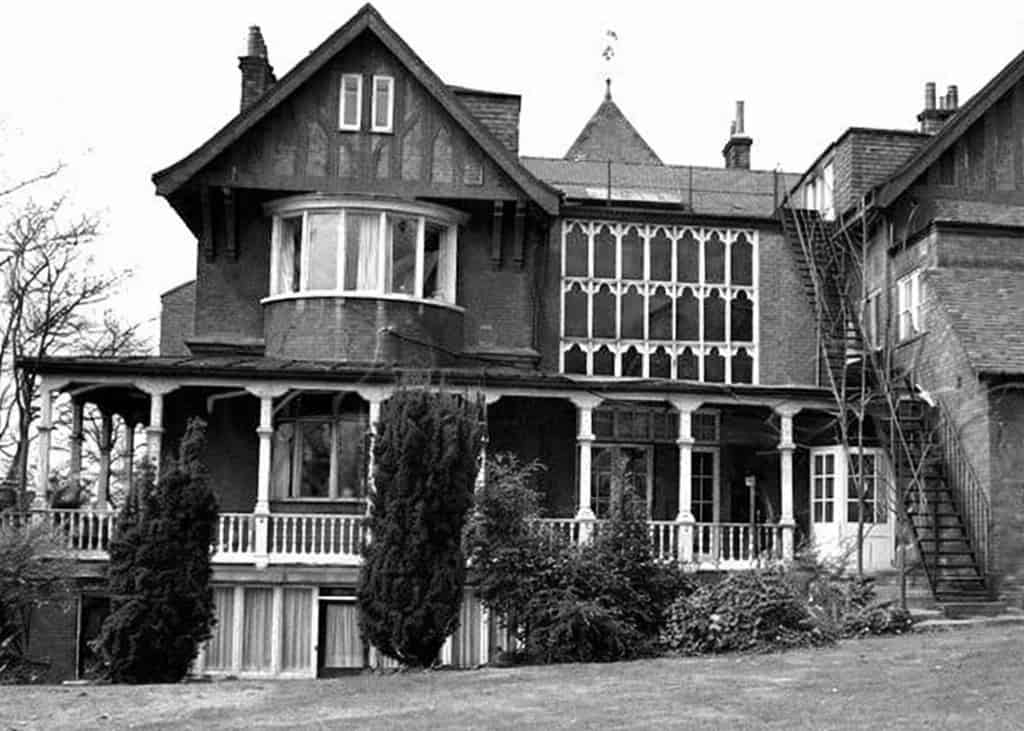
Image: David Bowie World collection / editorial use
The Arts Lab spirit did not vanish after the festival. It flowed into Bowie’s later communal life at Haddon Hall in Southend Road, Beckenham, where musicians, partners, friends and collaborators gathered around the early evolution of the Ziggy Stardust world.
In that sense, Beckenham was not merely a prelude. It was a foundation: a place where Bowie’s ideas about art, performance, domestic mythology and creative community began to merge.
Influence on Bowie’s future
Many historians view the Beckenham period as one of the psychological birthplaces of Bowie’s later transformations. The Arts Lab taught him that audiences could accept — and even celebrate — artistic risk when it was presented with conviction.
Without this formative chapter, it is difficult to imagine the bold theatricality of Ziggy Stardust, the conceptual ambition of Diamond Dogs, or Bowie’s later instinct for surrounding music with complete visual and narrative worlds.
Beckenham’s later recognition
The importance of Bowie’s Beckenham years was later recognised through local commemorations at the former Three Tuns site. Those tributes reflected how deeply this small South London scene had entered Bowie history.
Beckenham’s role is easy to overlook beside later landmarks such as Haddon Hall, Trident Studios or the Ziggy Stardust tours, but the Arts Lab remains one of the most revealing chapters in Bowie’s early development.
Legacy
Though the Beckenham Arts Lab existed only briefly in its original form, its impact far outweighed its lifespan. It represents a moment when Bowie was not yet a star, but already a visionary: testing community, performance, identity and myth on a small local stage.
Today, the Lab stands as a reminder that great careers often begin in modest, experimental spaces — places where imagination matters more than commercial success.
The Beckenham Arts Lab and Bowie’s early creative world
This surviving visual material helps place the Beckenham period in context: local, informal, idealistic and far removed from the global mythology Bowie would later command.
That contrast is exactly what makes the Arts Lab so important. It shows Bowie before stardom, already learning how to turn small spaces into imaginative worlds.
David Bowie Beckenham Arts Lab The Chronology
🏛️ The Three Tuns (Pub)
🎤 Event: First Three Tuns / Growth Folk Club appearance
🗒️ Notes: David Bowie performs for the first time at The Three Tuns. The Sunday sessions were initially billed as the Folk Club / Growth and later developed into the Beckenham Arts Lab, organised around Bowie, Mary Finnigan, Barrie Jackson and Christina Ostrom.
🏛️ The Speakeasy Club
🤝 Event: Meeting Angela Barnett (Angie)
🗒️ Notes: David meets Angela Barnett for the first time, a relationship that would later have significant personal and managerial consequences.
🏛️ Marquee Club, Soho
🎤 Event: Marquee Club Appearance
🗒️ Notes: Bowie appears on a mixed bill at the Marquee Club, presenting material associated with the emerging Arts Lab circle.
🏛️ The Three Tuns
🎤 Event: Arts Lab Sunday Session
🗒️ Notes: Bowie performs an acoustic set featuring newly written folk-oriented material. These sessions serve as an experimental platform for developing songs and performance style.
🏛️ BBC Television Centre (Studio 4), White City
📺 Event: TV Recording ‘Colour Me Pop’
🗒️ Notes: Bowie records a live-to-tape performance of ‘Space Oddity‘ for the BBC2 programme ‘Colour Me Pop’.
🏛️ Wigmore Hall
🎭 Event: Guest Mime Performance
🗒️ Notes: Bowie performs a guest mime spot during Tim Hollier’s concert.
🏛️ The Three Tuns
🎤 Event: Arts Lab Performance
🗒️ Notes: Another Sunday session at the Arts Lab, reinforcing Bowie’s growing involvement in a local network of musicians and performers.
🏛️ BBC Two Television
📺 Event: TV Broadcast ‘Colour Me Pop’
🗒️ Notes: Nationwide broadcast of the performance recorded on May 22, introducing Bowie to a broader television audience.
🏛️ Trident Studios, Soho
🎧 Recording: ‘Space Oddity‘ Single
🗒️ Notes: Bowie records the definitive single version of ‘Space Oddity‘ with ‘Wild Eyed Boy from Freecloud’ as the B-side. Produced by Gus Dudgeon with orchestration by Paul Buckmaster.
🏛️ The Three Tuns
🎤 Event: Benefit Performance for the Arts Lab
🗒️ Notes: Bowie headlines a fundraising event supporting the upcoming Beckenham Free Festival.
🏛️ Trident Studios
🎧 Recording: Start of Album Sessions
🗒️ Notes: Bowie begins recording his second studio album with producer Tony Visconti and musicians including members of Junior’s Eyes.
🚀 Event: Apollo 11 Moon Landing
🗒️ Notes: The BBC incorporates ‘Space Oddity‘ into its pre-planned coverage of the Apollo 11 mission, significantly increasing public awareness of the single.
🏛️ Trident Studios
🎧 Recording: ‘Cygnet Committee’
🗒️ Notes: Sessions continue with work on the track ‘Cygnet Committee’, reflecting Bowie’s expanding songwriting scope.
🏛️ Independence Arena
🎤 Performance: ‘Another Little Star’
🗒️ Notes: Bowie performs at the Malta International Song Festival and accepts the award for Best Produced Record on behalf of the production team.
🎬 Event: Death of Haywood ‘John’ Jones
🗒️ Notes: Bowie’s father dies from pneumonia during this period.
🏛️ Croydon Road Recreation Ground
🎤 Event: Beckenham Free Festival (Growth Summer Festival)
🗒️ Notes: The festival later inspires the song ‘Memory of a Free Festival’.
🏛️ Trident Studios, Soho
🎧 Recording: ‘Space Oddity‘ Album Sessions
🗒️ Notes: Final recordings and overdubs are completed for several album tracks, including ‘Cygnet Committee’ and ‘Memory of a Free Festival’.
🏛️ AVRO TV Studios
📺 Event: TV Recording — ‘Doebidoe’
🗒️ Notes: Bowie records a performance of ‘Space Oddity‘ for the Dutch television programme ‘Doebidoe’.
🏛️ Vernon Yard
📸 Event: Album Cover Photoshoot
🗒️ Notes: Photographer Vernon Dewhurst photographs Bowie for the album artwork, later used for the cover of the ‘David Bowie’ (Space Oddity) album.
🏛️ The Big Apple
🎤 Artist: David Bowie
🗒️ Notes: A solo performance at this Brighton venue as ‘Space Oddity‘ continues climbing the UK charts.
🏛️ Free Lane
🎤 Artist: David Bowie
🗒️ Notes: A live performance during a period in which Bowie frequently appeared solo to promote the success of the ‘Space Oddity‘ single.
🏛️ Trident Studios
🎧 Recording: ‘Conversation Piece‘
🗒️ Notes: David records ‘Conversation Piece‘ with producer Tony Visconti. The track is later issued as the B-side to ‘The Prettiest Star’ in 1970.
🏛️ The Three Tuns Public House
🎤 Artist: David Bowie
🗒️ Notes: Bowie performs at the Beckenham Arts Lab. The session is recorded on a domestic tape recorder, with portions later appearing on official releases.
📺 Event: TV Broadcast: ‘Doebidoe’
🗒️ Notes: Dutch television broadcast of Bowie’s performance recorded at the AVRO studios in August.
🏛️ Bal Tabarin
🎤 Artist: David Bowie
🏛️ BBC Television Centre, White City
📺 Event: TV Recording ‘Top Of The Pops’
🗒️ Notes: Bowie makes his debut on Top Of The Pops performing ‘Space Oddity‘.
🏛️ Purley Orchard
🎤 Artist: David Bowie / Junior’s Eyes
🗒️ Notes: Performance backed by musicians from Junior’s Eyes who also played on the ‘Space Oddity‘ album.
🏛️ Three Tuns Public House
🎤 Artist: David Bowie
🗒️ Notes: Performance at the Beckenham Arts Lab.
🏛️ Aeolian Hall (Studio 2)
🎤 Artist: David Bowie / Junior’s Eyes
🗒️ Notes: Recording session for BBC Radio 1’s ‘The Dave Lee Travis Show’. Bowie performs ‘Unwashed and Somewhat Slightly Dazed’, ‘Let Me Sleep Beside You’, and ‘Janine’.
🏛️ Haddon Hall
🎬 Event: Moving to Haddon Hall
🗒️ Notes: David and Angie move into a ground-floor flat in the Victorian mansion, which becomes his home and rehearsal space.
🏛️ Ealing College of Technology
🎤 Artist: David Bowie / Junior’s Eyes
🗒️ Notes: University circuit performance following the chart success of ‘Space Oddity‘.
🏛️ Lyceum Ballroom, Strand
🎤 Artist: David Bowie / Junior’s Eyes
🗒️ Notes: Bowie performs at the ‘Love-In’ festival backed by Junior’s Eyes.
💿 Release: ‘David Bowie’ (Space Oddity) Album
🗒️ Notes: Release of Bowie’s second studio album on Philips (SBL 7912).
🚀 Event: ‘Space Oddity‘ peaks at No. 5
🗒️ Notes: The single reaches No. 5 on the UK Singles Chart.
🏛️ Blue Web Club
🎤 Artist: David Bowie (Live)
🏛️ Community Centre / Grand Hall
🎤 Artist: David Bowie (Live)
🏛️ Kinema Ballroom
🎤 Artist: David Bowie (Live)
🏛️ TV-Studios (Hits à Gogo)
🎬 Event: TV Performance: ‘Hits à Gogo’
🗒️ Notes: Bowie travels to Switzerland to mime ‘Space Oddity‘ for the SRF/ZDF co-production.
🏛️ Adam Smith Hall
🎤 Artist: David Bowie (Live)
🏛️ Frisco’s Club
🎤 Artist: David Bowie (Live)
🗒️ Notes: Second performance of the day following the Kirkcaldy concert.
🏛️ Caird Hall
🎤 Artist: David Bowie
🗒️ Notes: Performance cancelled.
🏛️ TWW Studios
📺 Event: TV Recording ‘Discs-a-Gogo’
🗒️ Notes: Bowie records a performance of ‘Space Oddity‘ for the regional music programme.
🏛️ Brighton Dome
🎤 Artist: David Bowie (Live)
🏛️ Purcell Room
🎤 Artist: David Bowie (Live)
🏛️ ZDF Studios
📺 Event: TV Appearance ‘Musik Für Junge Leute’
🗒️ Notes: Bowie performs ‘Space Oddity‘ for German television.
🏛️ London Palladium
🎤 Artist: David Bowie (Live)
🏛️ Marquee Club, Soho
🎤 Artist: David Bowie
🗒️ Notes: Bowie makes a guest appearance at the Marquee Club.
🏛️ BBC Studios
📺 Event: TV Recording ‘Cilla’ (The Cilla Black Show)
🗒️ Notes: Bowie records ‘Space Oddity‘ for Cilla Black’s variety show.
🏛️ Morgan Studios
🎧 Recording: ‘Ragazzo Solo, Ragazza Sola’ (Italian ‘Space Oddity‘)
1970
🏛️ Trident Studios
🎧 Recording: ‘The Prettiest Star’
🗒️ Notes: Bowie records a new single featuring Marc Bolan on lead guitar, produced by Tony Visconti.
🏛️ Old Tiger Heads
🎤 Artist: David Bowie
🏛️ Trident Studios
🎧 Recording: ‘The Prettiest Star’ (Final Mix)
🗒️ Notes: Final mix of the single is completed.
🏛️ The Three Tuns
🎤 Artist: David Bowie
🗒️ Notes: Final regular Sunday night appearance at the Beckenham Arts Lab.