Ziggy Stardust (1972) – The Story Behind the Album Cover
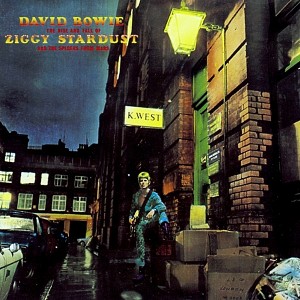
Image: David Bowie World collection / editorial use
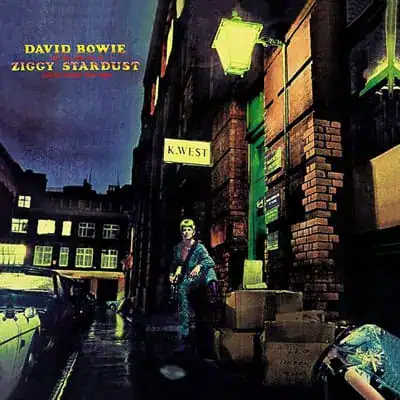
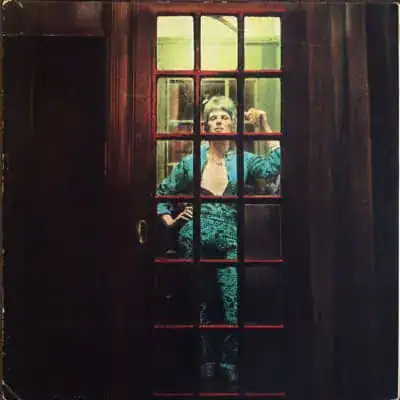
The Rise and Fall of Ziggy Stardust and the Spiders from Mars features one of the most famous album covers in rock history. Instead of presenting David Bowie in a glamorous studio portrait, the sleeve shows him standing alone in a dark London street beneath the now legendary K. West sign.
The image looked mysterious, cinematic and strangely realistic at the same time. It captured the feeling that Ziggy Stardust had suddenly appeared in the ordinary world — half alien, half rock star, somewhere between fantasy and reality.
- Album: The Rise and Fall of Ziggy Stardust and the Spiders from Mars
- Released: 16 June 1972
- Cover location: 23 Heddon Street, London
- Photographer: Brian Ward
- Artwork colouring: Terry Pastor
- Famous sign: K. West
- Date of photo shoot: January 1972
A strangely understated Bowie cover
For an album built around one of Bowie’s most theatrical creations, the Ziggy Stardust sleeve is surprisingly quiet and restrained. There is no lightning bolt make-up, no stage performance and no dramatic close-up portrait.
Instead, Bowie appears almost small within the image. He stands in a narrow London side street, surrounded by brick buildings, parked cars, shop fronts and cardboard boxes. The setting feels ordinary, almost documentary-like.
That contrast became one of the sleeve’s greatest strengths. Ziggy Stardust looked like a visitor from another planet who had briefly appeared in a normal London street.
The location: Heddon Street
The photograph was taken at 23 Heddon Street, just off Regent Street in central London. At the time, the street was relatively quiet and not considered a glamorous location.
Photographer Brian Ward’s studio was nearby, making the location practical for a quick evening photo session. Bowie and the crew reportedly left the studio shortly before darkness completely disappeared in order to capture the shot.
The weather conditions helped shape the atmosphere of the image. The street was wet, the lighting was dim and rain had started falling during the shoot. Those accidental details gave the cover its cold, cinematic mood.


Bowie was ill during the shoot
During the Heddon Street session, Bowie was reportedly suffering from flu symptoms. The shoot itself was relatively fast and practical rather than carefully staged over many hours.
Ironically, the rushed and uncomfortable circumstances helped create one of the most iconic photographs of Bowie’s career.
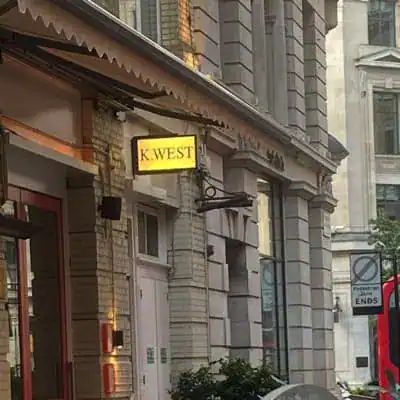
The famous K. West sign
The large glowing K. West sign behind Bowie became one of the defining visual elements of the sleeve.
The sign belonged to a furrier business operating from the building. As the album grew in popularity, many fans began wondering whether the words carried a hidden meaning.
Some believed “K. West” represented a coded message or symbolic clue connected to Ziggy Stardust. In reality, there is no confirmed evidence that Bowie intended the sign to contain any secret meaning. Its importance came later through myth, repetition and fan culture.
From ordinary business to Bowie landmark
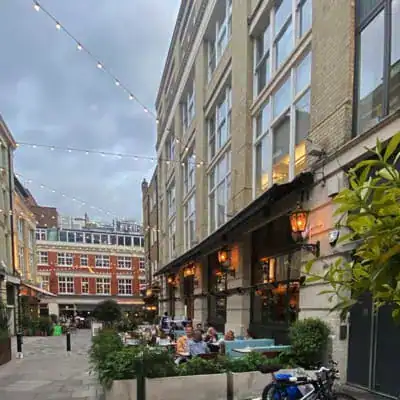
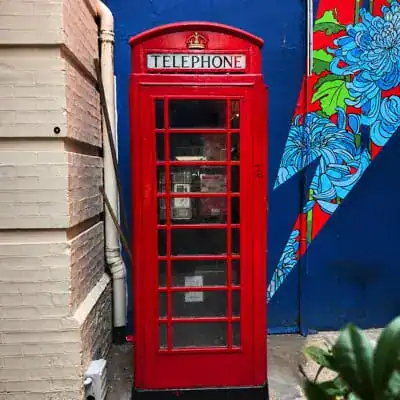
As Ziggy Stardust became one of the defining albums of the 1970s, Heddon Street slowly transformed into a pilgrimage site for Bowie fans.
Visitors travelled from around the world to recreate the album cover photograph beneath the K. West sign. Over time, the location became permanently associated with Bowie rather than with the original business itself.
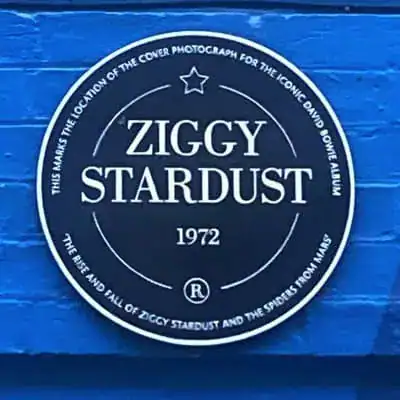
The original K. West company eventually left the building, but the Bowie connection never disappeared. In 2012, a commemorative plaque was installed at Heddon Street to honour the historic album cover location.
Brian Ward and Terry Pastor
The original photograph was taken by photographer Brian Ward, who had already worked with Bowie before the Ziggy sessions.
Artist Terry Pastor later enhanced and recoloured the image for the final sleeve design. That colouring process helped transform a simple London street photograph into something dreamlike and otherworldly.
The final image feels suspended somewhere between realism and science fiction — exactly the atmosphere Bowie wanted for Ziggy Stardust.
The guitar in Bowie’s hand
One detail often overlooked is the guitar Bowie is holding in the photograph. It was not positioned aggressively like a rock performance prop. Instead, it hangs almost casually, adding to the strange feeling that Ziggy has simply wandered into the street from another reality.
The image avoids traditional rock-star clichés. Bowie appears mysterious, distant and almost detached from the ordinary world around him.
Why the cover became iconic
The Ziggy Stardust sleeve works because it leaves room for imagination. It does not explain who Ziggy is. It simply presents him.
The viewer sees an unusual figure standing beneath an illuminated sign in a dark London street, and the mystery begins immediately.
Over time, the image became inseparable from Bowie himself. Even people unfamiliar with the album often recognise the Heddon Street photograph instantly.
The back cover instruction
The rear sleeve of the album featured one of Bowie’s most famous messages:
“TO BE PLAYED AT MAXIMUM VOLUME.”
The phrase perfectly matched the ambition of the Ziggy Stardust era: theatrical, loud, dramatic and larger than life.
Legacy
Today, the Ziggy Stardust cover is regarded as one of the defining images of 1970s rock music. What began as a quick photo session in a rainy London side street became one of the most celebrated album sleeves ever created.
The photograph transformed an otherwise ordinary location into part of Bowie mythology — proof that sometimes the most iconic images are created in the least glamorous circumstances.
Article origin
This page was inspired by articles and historical material discussing the Ziggy Stardust album cover, including writing by Jacob Uitti and David Bowie World archive material, combined with historically verified information about the Heddon Street photo session.