
The Man Who Sold The World (1970) – The Story Behind the Album Cover
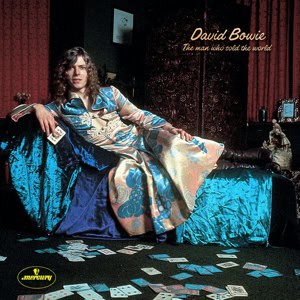
Image: David Bowie World collection / editorial use
The Man Who Sold The World features one of the most controversial and historically important album covers in David Bowie’s career. The famous “dress cover” showed Bowie reclining on a chaise longue wearing a flowing Michael Fish dress, challenging gender expectations years before Ziggy Stardust transformed him into a global icon.
Today, the original UK Mercury pressing is considered one of the rarest and most collectible Bowie records ever released. Yet when it first appeared in 1971, the sleeve confused retailers, sold poorly and quickly disappeared from circulation.
- Album: The Man Who Sold The World
- Original release: November 1970 (US)
- UK “dress cover” release: April 1971
- Photographer: Keith MacMillan (“Keef”)
- Location: Haddon Hall, Beckenham
- Dress designer: Michael Fish
- US artwork: Michael J. Weller illustration
- Most famous version: The UK “dress cover”
The cover that shocked early-1970s Britain
When the UK version of The Man Who Sold The World appeared in 1971, many listeners had never seen anything like it.
David Bowie reclined dramatically on a chaise longue wearing a flowing patterned “man’s dress” designed by London fashion designer Michael Fish. His long hair, relaxed posture and feminine styling deliberately blurred traditional ideas of masculinity.
At the time, the image was provocative enough to confuse retailers and audiences alike.
The Michael Fish dress
The dress Bowie wore for the sleeve was designed by British fashion designer Michael Fish, one of the major figures associated with flamboyant late-1960s and early-1970s menswear.
Fish became famous for challenging conservative male fashion through colourful fabrics, wide ties and flowing garments. Bowie deliberately chose his design because it matched the androgynous image he was beginning to develop publicly.
The sleeve became one of the earliest major rock images to openly challenge rigid gender expectations in mainstream music culture.
Photographed at Haddon Hall

Image: David Bowie World collection / editorial use
The famous photograph was taken by photographer Keith MacMillan, who often used the name “Keef”.
The session took place at Haddon Hall, Bowie’s Victorian home in Beckenham, Kent. The location added an old-fashioned theatrical atmosphere to the image.
Rather than using a modern studio setting, the cover feels almost aristocratic and dreamlike, as though Bowie were posing inside a faded Edwardian painting.
The reclining pose
Bowie’s reclining pose became one of the most discussed elements of the sleeve.
The image was partly inspired by Pre-Raphaelite art and romantic portrait painting. Bowie appears elegant, theatrical and entirely comfortable within the visual ambiguity of the photograph.
Unlike later glam-rock imagery, the power of the cover comes from its calmness rather than aggression. Bowie is not performing for the camera; he seems almost detached from it.
The antique card
One detail often overlooked is the antique playing-style card Bowie holds in his hand.
The object added to the strange, theatrical atmosphere of the photograph and reinforced the feeling that the image belonged somewhere between fantasy, decadence and performance art.
The original US cover was completely different
The album originally appeared in the United States in November 1970 with entirely different artwork.
The American release featured an illustrated “cartoon cowboy” design by artist Michael J. Weller. The surreal image included references to Cane Hill mental asylum, which connected indirectly to themes of mental instability and family history surrounding the album.
That original US artwork was eventually replaced after Bowie became famous during the Ziggy Stardust era.
Why the “dress cover” became rare
The now legendary UK Mercury “dress cover” sold poorly at the time of release because Bowie was still far from becoming an international superstar.
Only a relatively small number of copies were pressed before the album was later withdrawn and repackaged with different artwork once Bowie’s fame exploded in 1972 and 1973.
Because of that short release window, surviving original copies became extremely rare.
From commercial failure to collector’s treasure
When the album first appeared, the cover created uncertainty rather than excitement.
Some record stores reportedly hesitated to display or stock the sleeve because of Bowie’s appearance. Others simply did not know how to market it.
Ironically, the same qualities that damaged the album commercially in 1971 eventually transformed it into one of the most celebrated sleeves in rock history.
Before Ziggy Stardust
One reason the cover feels historically important today is that it arrived before Bowie’s global breakthrough.
The image predates Ziggy Stardust, Aladdin Sane and Bowie’s full glam-rock fame. It represents an earlier stage where Bowie was already experimenting fearlessly with identity and visual presentation, but before mainstream culture fully understood what he was doing.
In many ways, the sleeve predicted the theatrical gender experimentation that would later become central to Bowie mythology.
A visual turning point
The cover marked one of the first times Bowie fully understood the power of album artwork as part of artistic identity.
Rather than treating the sleeve as simple packaging, Bowie used the image to challenge audiences, provoke discussion and extend the themes of the music visually.
That approach would later become one of the defining features of his career.
The later reissues
Once Bowie became famous through Ziggy Stardust, RCA Records reissued The Man Who Sold The World internationally with entirely new cover artwork featuring a Ziggy-era Bowie photograph.
As a result, many listeners for years never even saw the original “dress cover” version.
That absence only increased its mystique among collectors and fans.
The Three Main Cover Versions
One of the reasons The Man Who Sold The World became such an important collector’s album is because it appeared with several completely different sleeve designs within only a few years.
Each version reflects a different stage in Bowie’s early artistic evolution and public image.
1. The US “Cartoon Cowboy” Cover (1970)

Image: David Bowie World collection / editorial use
The original American release from November 1970 featured artwork completely different from the later “dress cover”.
Created by illustrator Michael J. Weller, the sleeve showed a surreal cartoon-like cowboy figure standing in front of Cane Hill mental asylum.
The image connected loosely to themes of madness, isolation and fragmented identity that also appeared in the album itself.
Although historically important, this version was later overshadowed by Bowie’s far more controversial UK sleeve.
2. The UK “Dress Cover” (1971)

Image: David Bowie World collection / editorial use
The famous UK Mercury “dress cover” appeared in April 1971 and became the album’s most legendary sleeve.
Photographed by Keith MacMillan (“Keef”) at Haddon Hall, the image showed Bowie reclining on a chaise longue wearing a Michael Fish dress.
The cover challenged conventional ideas of masculinity years before Bowie became internationally famous through Ziggy Stardust.
Because the album sold poorly at the time and was quickly replaced by later artwork, original UK pressings became extremely rare and highly collectible.
3. The RCA / Ziggy-Era Reissue Cover (1972 Onwards)
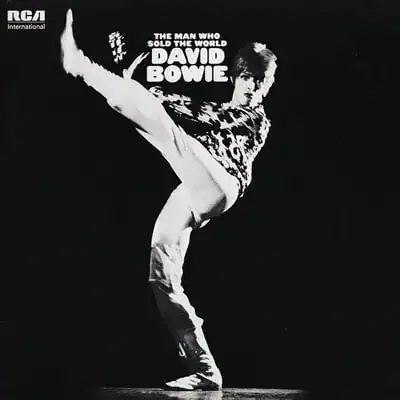
Image: David Bowie World collection / editorial use
After Bowie became a global star through Ziggy Stardust, RCA Records reissued The Man Who Sold The World with new artwork featuring a Ziggy-era Bowie photograph.
This became the version many listeners first encountered during the 1970s.
The reissue artwork was less controversial and commercially easier to market than the original “dress cover”.
As Bowie’s fame exploded internationally, the earlier Mercury versions gradually disappeared from shops and became collector’s items.
Legacy
Today, the “dress cover” of The Man Who Sold The World is regarded as one of Bowie’s boldest and most historically significant visual statements.
The sleeve captured Bowie at the exact moment where music, fashion, theatre and identity began merging into the artistic universe that would soon make him world famous.
More than fifty years later, the image still feels daring — not because of shock value alone, but because of the confidence and elegance with which Bowie presented it.
Article origin
This page was inspired by documented material surrounding the original Mercury “dress cover”, historical Bowie archive information, Michael Fish fashion history and accounts of the Keith MacMillan photo session at Haddon Hall.