
“Heroes” (1977) – The Story Behind the Album Cover
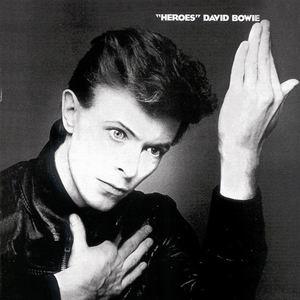
Image: David Bowie World collection / editorial use
David Bowie’s “Heroes” is one of the most powerful images and albums of his Berlin period. Released in 1977, it was recorded at Hansa Studio in West Berlin and shaped by the city’s divided atmosphere, Bowie’s collaboration with Brian Eno and Tony Visconti, and the striking visual influence of German Expressionist art.
The album cover, photographed by Masayoshi Sukita, became one of Bowie’s most recognisable portraits. Its dramatic hand gesture was not accidental: the pose was closely connected to Bowie’s interest in the German Expressionist painter Erich Heckel and the visual language of Die Brücke.
- Album: “Heroes”
- Artist: David Bowie
- Released: 14 October 1977
- Recorded: July–August 1977
- Studio: Hansa Studio, West Berlin
- Producers: David Bowie and Tony Visconti
- Key collaborators: Brian Eno, Tony Visconti, Robert Fripp, Carlos Alomar, George Murray, Dennis Davis
- Cover photographer: Masayoshi Sukita
- Visual influence: Erich Heckel and German Expressionism
Berlin and the divided city
By 1977, Bowie had moved away from the extreme pressures of Los Angeles and was living in West Berlin. Together with Iggy Pop, he found a city where he could work, walk around more freely, visit museums and absorb a very different cultural atmosphere.
Berlin was not simply a background for the album. It was central to its mood. The city was divided by the Berlin Wall, and Hansa Studio stood close enough to the Wall for that tension to be felt during the sessions. Bowie’s music from this period often carries that mixture of isolation, danger, discipline and strange beauty.
The Hansa sessions
“Heroes” was recorded at Hansa Studio in West Berlin during the summer of 1977. The album followed Low and became the second part of what is now usually called Bowie’s Berlin Trilogy, although only “Heroes” was recorded entirely in Berlin.
The sessions brought together Bowie, Tony Visconti and Brian Eno, with the rhythm section of Dennis Davis, George Murray and Carlos Alomar providing much of the musical foundation. Robert Fripp was later brought in for the extraordinary guitar textures that became central to the title track.
The lovers by the Wall
The best-known story connected to the song “Heroes” concerns Tony Visconti and German singer Antonia Maass. Bowie later confirmed that he had seen Visconti and Maass kissing near the Berlin Wall and that the image helped inspire the lyric of two lovers meeting under the shadow of the Wall.
For years Bowie kept Visconti’s name out of the story because Visconti was married at the time. That discretion helped turn the scene into a more mysterious image: two anonymous people, briefly defying a divided world around them.
It is important not to turn the story into pure legend. Bowie also drew from other ideas and images while writing the song, and the final lyric is larger than one private moment. But the Visconti and Maass episode remains one of the confirmed inspirations behind the emotional centre of “Heroes”.
Brian Eno and Robert Fripp
Brian Eno’s role was essential to the atmosphere of the album. He helped Bowie explore texture, mood and unusual compositional ideas rather than conventional rock arrangements.
Robert Fripp’s guitar on the title track is one of the most memorable parts of the recording. His sustained, almost vocal lines gave the song a soaring quality that matched the emotional rise of Bowie’s vocal performance.
The cover and Erich Heckel
The “Heroes” sleeve is visually linked to German Expressionism. Bowie was particularly interested in the work of Erich Heckel, a member of the Die Brücke movement. Heckel’s painting Roquairol is often cited as the key visual reference behind Bowie’s pose.
The same artistic influence can also be seen around Iggy Pop’s The Idiot, another Berlin-era project closely connected to Bowie. The two covers share a theatrical, angular physical language that points back to Expressionist painting rather than ordinary rock photography.
Masayoshi Sukita’s photograph turned that influence into a stark modern icon. Bowie’s hands, face and posture suggest performance, distance and vulnerability all at once. The image is simple, but it contains the same tension as the music: controlled, dramatic and emotionally charged.
Not just a romantic myth
The power of “Heroes” lies in the way private emotion and public history seem to meet. The Wall, the studio, the lovers, the sound of Fripp’s guitar and Bowie’s vocal all became part of one larger image.
The song was not a huge worldwide hit when first released, but its reputation grew steadily. Over time it became one of Bowie’s defining works: a song about hope that never pretends the world is simple.
Legacy
Today, “Heroes” is one of the essential works of Bowie’s career. The album cover remains inseparable from the music, and both are inseparable from Berlin.
Hansa Studio still exists, but the city around it has changed dramatically since the 1970s. The Berlin Wall fell in 1989, and the political landscape that shaped the album disappeared. Yet the image of Bowie on the cover, and the sound of “Heroes”, continue to carry the emotional weight of that time.
Column origin
This page is based on the column “Het verhaal achter de platenhoes – Heroes (1977)” by Gerrit-Jan Vrielink. The text has been reshaped into a historically careful Bowie World page, with the romanticised parts separated from the confirmed facts.