Brian Duffy – Photographer Behind David Bowie’s Most Iconic Album Covers

Image: David Bowie World collection / editorial use
Brian Duffy was one of the most important photographers in David Bowie’s career and the creator of some of the most famous images in rock history.
His collaborations with Bowie produced three iconic album covers — Aladdin Sane (1973), Lodger (1979) and Scary Monsters (and Super Creeps) (1980) — helping define Bowie’s visual identity across several crucial artistic periods.
- Name: Brian Duffy
- Born: 15 June 1933
- Died: 31 May 2010
- Profession: Photographer
- Bowie connection: Photographer of Aladdin Sane, Lodger and Scary Monsters
- Known for: One of Britain’s most influential fashion and portrait photographers
One of Britain’s great photographers
Brian Duffy emerged during the 1960s as one of the most influential photographers in British fashion and portrait photography.
Alongside contemporaries such as David Bailey and Terence Donovan, he helped transform fashion photography into a more dynamic and culturally influential art form.
Unlike many photographers of the period, Duffy often approached his subjects with a combination of technical precision, humour and experimentation, qualities that made him particularly compatible with David Bowie.
The first Bowie collaboration: Aladdin Sane
The most famous collaboration between Brian Duffy and David Bowie came in 1973 with the cover of Aladdin Sane.
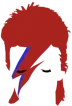
Featuring Bowie with a red-and-blue lightning bolt painted across his face, the image became one of the most recognisable photographs in music history.
Although often interpreted as a symbol of Ziggy Stardust, the image was actually created for the new Aladdin Sane persona and represented Bowie’s continuing artistic evolution rather than a simple continuation of Ziggy.
The photograph became so iconic that it eventually transcended the album itself, becoming one of the defining visual symbols of David Bowie’s entire career.
A creative partnership built on trust
Bowie and Duffy developed a strong creative relationship based on mutual respect. Unlike many celebrity photo sessions, their collaborations often involved extensive planning, experimentation and conceptual discussion.
Duffy understood that Bowie viewed visual presentation as an essential extension of his music rather than simple promotion.
This shared understanding allowed both men to take creative risks that might not have been possible within a more conventional artist-photographer relationship.
Lodger (1979)
Brian Duffy reunited with Bowie for the cover of Lodger in 1979.
The image presented Bowie in a dramatically distorted pose, appearing injured and physically twisted. The unusual composition reflected the album’s themes of displacement, travel and fractured identity.
The cover remains one of Bowie’s most unconventional visual statements and demonstrated Duffy’s willingness to move beyond traditional portrait photography.
Scary Monsters (and Super Creeps)
Their third major collaboration came with Scary Monsters (and Super Creeps) in 1980.
By this point Bowie was moving away from the Berlin-era period and entering a new phase of artistic reflection.
Duffy’s photography captured this transition by presenting Bowie in a more theatrical, self-referential and visually layered way, reflecting the album’s themes of memory, identity and reinvention.
The Duffy trilogy of Bowie covers
The covers for Aladdin Sane, Lodger and Scary Monsters (and Super Creeps) are often viewed collectively as the three major Bowie album covers created by Brian Duffy.
Together they document three very different artistic periods: glam-rock superstardom, Berlin-era experimentation and the reflective transition into the 1980s.
Few photographers became so closely associated with multiple defining chapters of Bowie’s career.
Cover Story pages on David Bowie World
Many of Brian Duffy’s most important David Bowie collaborations are explored in greater detail through the dedicated Cover Story pages on David Bowie World.
These pages examine the history, creation and artistic significance of the Bowie album covers on which Duffy worked, including Aladdin Sane, Lodger and Scary Monsters (and Super Creeps).
Together they provide a deeper look into the visual concepts, photographic techniques and creative decisions that helped shape some of the most famous images in music history.
The documentary Duffy
Interest in Brian Duffy’s work increased significantly during the final years of his life and after his death in 2010.
In 2014, the documentary Duffy, directed by his son Chris Duffy, explored his career, personality and cultural impact.
The film helped introduce Duffy’s photography to a new generation and highlighted the importance of his collaborations with David Bowie.
Legacy
Brian Duffy’s contribution to David Bowie’s career extended far beyond photography. He helped construct some of the visual mythology that surrounds Bowie to this day.
The lightning bolt of Aladdin Sane, the fractured image of Lodger and the theatrical imagery of Scary Monsters (and Super Creeps) remain central parts of Bowie’s visual legacy.
Together, Bowie and Duffy demonstrated that album artwork could become an essential component of artistic identity rather than simply a marketing tool.
More than fifty years after the creation of the Aladdin Sane cover, Brian Duffy’s work continues to influence photographers, designers, musicians and Bowie fans around the world.