
Brian “Croke” Prebble – Bass Guitarist of The Riot Squad
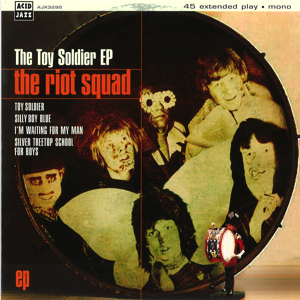
Image: David Bowie World collection / editorial use
Brian “Croke” Prebble was the bassist and one of the vocalists of The Riot Squad, the British psychedelic pop group that briefly included David Bowie during 1967.
Although Bowie’s time with the band was relatively short, The Riot Squad occupies an important place in Bowie history because it captures a transitional moment between his early mod and rhythm & blues years and the more adventurous artistic directions that would soon define his career.
- Name: Brian “Croke” Prebble
- Role: Bass guitar, vocals
- Band: The Riot Squad
- With Bowie: 1967
- Known Bowie recordings: “Toy Soldier”, “Little Toy Soldier”, “Cupid” sessions
The Riot Squad in the London underground scene
By 1967, London’s music scene was changing rapidly. The British rhythm & blues boom that had shaped many early bands was giving way to psychedelic experimentation, theatrical imagery and increasingly ambitious studio productions.
The Riot Squad emerged within this environment as a group that blended elements of beat music, psychedelia and pop. Although the band never achieved major commercial success, it became associated with several musicians who later attracted considerable historical interest, including David Bowie.
Brian “Croke” Prebble’s role
Brian Prebble, often known by the nickname “Croke”, served as bassist and vocalist within The Riot Squad.
As with many late-1960s British groups, band members frequently contributed beyond their primary instruments, participating in harmonies, arrangements and the development of material during rehearsals and recording sessions.
While detailed documentation about individual Riot Squad members remains limited compared with Bowie’s later collaborators, Prebble was part of the group during the period when Bowie became involved with the band.
David Bowie joins The Riot Squad
David Bowie joined The Riot Squad during 1967, at a time when his first solo album had failed to generate significant commercial attention.
Bowie’s involvement with the band reflected his continuing search for a musical identity. He was experimenting with songwriting, performance styles and theatrical concepts, while simultaneously trying to establish himself within the rapidly evolving London scene.
The Riot Squad offered Bowie another opportunity to perform, write and record material during a period when his career remained uncertain.
The “Toy Soldier” recordings
One of the most frequently discussed Bowie-related Riot Squad recordings is “Toy Soldier”, sometimes also associated with the title “Little Toy Soldier”.
These recordings were created during Bowie’s brief period with the group and reveal elements that would later become more prominent in his songwriting, including theatrical storytelling and unusual character perspectives.
Although the material remained unreleased at the time, it later became historically important because it documented Bowie’s artistic development during a largely undocumented phase of his career.
“Cupid” and Bowie’s songwriting
Another significant recording connected with this period is “Cupid”, a Bowie composition associated with Riot Squad sessions.
The track demonstrated Bowie’s growing interest in narrative songwriting and more sophisticated lyrical structures than those found in many contemporary pop recordings.
While these recordings did not lead to commercial success, they reveal a songwriter gradually moving toward the artistic ambition that would later define albums such as Hunky Dory and The Rise and Fall of Ziggy Stardust and the Spiders from Mars.
A transitional Bowie period
Bowie’s time in The Riot Squad remains fascinating because it occurred between two better-known phases of his early career.
He had already passed through bands such as The King Bees, The Manish Boys and The Lower Third, yet had not yet developed the distinctive artistic identity that would emerge at the end of the 1960s.
The Riot Squad therefore represents one of the final chapters of Bowie’s pre-fame years, when experimentation often took place away from major commercial attention.
Brian Prebble’s place in Bowie history
Unlike collaborators such as Mick Ronson, Tony Visconti or Brian Eno, Brian “Croke” Prebble is not remembered primarily because of a long association with David Bowie.
Nevertheless, his place within The Riot Squad connects him directly to an important transitional stage in Bowie’s development.
Musicians such as Prebble helped form the environment in which Bowie continued learning, experimenting and refining his craft during the late 1960s.
Historical importance
The Riot Squad period remains one of the more obscure chapters of David Bowie’s early career, yet it provides valuable insight into how he evolved before achieving widespread recognition.
Through recordings such as “Toy Soldier”, “Little Toy Soldier” and “Cupid”, Bowie fans can trace the emergence of ideas that would later become central to his work.
Brian “Croke” Prebble’s contribution may have taken place largely outside the spotlight, but his connection to The Riot Squad ensures his place within the broader story of David Bowie’s remarkable artistic journey.