
Hauptstraße 155 – David Bowie’s Berlin Apartment (1976–1978)

Photo: Unknown photographer / Wikimedia Commons / CC BY-SA 3.0 (editorial use)
Hauptstraße 155, located in the Berlin district of Schöneberg, is one of the most important physical locations in David Bowie’s life and career. Between 1976 and 1978, Bowie lived here during a period of personal recovery and artistic reinvention that would lead to the creation of the so-called Berlin Trilogy.
Far removed from the excess and instability of Los Angeles, this modest apartment offered Bowie something he had not experienced in years: anonymity, routine, and the space to rebuild both his life and his art.
- Address: Hauptstraße 155, Schöneberg, Berlin
- Years: 1976–1978
- Resident: David Bowie
- Also lived here: Iggy Pop (early period)
- Era: Berlin period / artistic reinvention
- Nearby: Café Neues Ufer (former “Anderes Ufer”)
Escape from Los Angeles
By the mid-1970s, David Bowie had reached a breaking point. After a decade in the global spotlight, his life in Los Angeles had become increasingly unstable, dominated by heavy cocaine use, paranoia and emotional exhaustion.
Financial complications — including legal disputes with his management — further intensified his situation. Bowie later reflected that he had come dangerously close to collapse and needed to take decisive action.
In 1976, he left the United States and relocated to Europe, eventually settling in West Berlin — a city that offered both physical and psychological distance from his previous life.
Life at Hauptstraße 155
Bowie’s apartment at Hauptstraße 155 was a large first-floor Altbau flat, characterised by high ceilings, simple interiors and a view over the street from its balcony. It was deliberately modest — a “back to basics” environment that reflected his desire for simplicity and stability.
The apartment was found by his assistant Coco Schwab, after Bowie initially stayed at the Schlosshotel im Grunewald. Here, Bowie established a quiet daily routine, far removed from the chaos of his earlier lifestyle.
In the early period, Iggy Pop lived in the apartment with Bowie. Their close friendship during this time played a crucial role in both artists’ creative renewal. Later, Bowie arranged accommodation for Iggy across the street, but their collaboration continued.
Living incognito in Berlin
One of the most striking aspects of Bowie’s Berlin years was his relative anonymity. Unlike London or Los Angeles, Berlin allowed him to move through the city largely unrecognised.
To maintain this anonymity, Bowie adopted a low profile — often reading German newspapers on public transport and speaking basic German when necessary. His assistant would sometimes deflect attention by suggesting mistaken identity, allowing Bowie to remain unnoticed.
This anonymity became essential to his recovery, giving him the freedom to experience everyday life again.
Schöneberg and its cultural significance
The district of Schöneberg had long been associated with artistic and cultural life. Since the 1920s, it had been a centre of Berlin’s LGBTQ+ community and a hub for writers, performers and intellectuals.
Bowie was familiar with the area through Goodbye to Berlin (1939) by Christopher Isherwood — a book that had deeply influenced his perception of the city. The same literary world would later inspire the film Cabaret.
The atmosphere of Schöneberg — bohemian yet unpretentious, worn yet vibrant — aligned perfectly with Bowie’s state of mind during this period.
A period of transformation


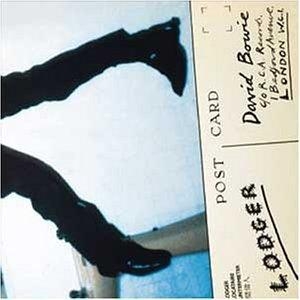
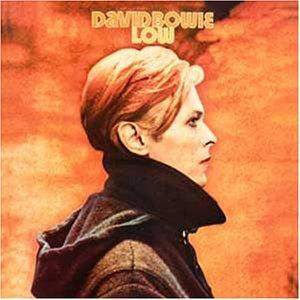

Bowie’s time at Hauptstraße 155 coincided with one of the most productive periods of his career. Within two years, he completed multiple albums and redefined his artistic direction.
This period ultimately led to the creation of Low, “Heroes” and Lodger, works that reshaped the landscape of modern music.
Berlin provided not only a physical refuge, but also a creative catalyst. Its divided identity, underground culture and emotional intensity became central to Bowie’s evolving sound.
Legacy of the location

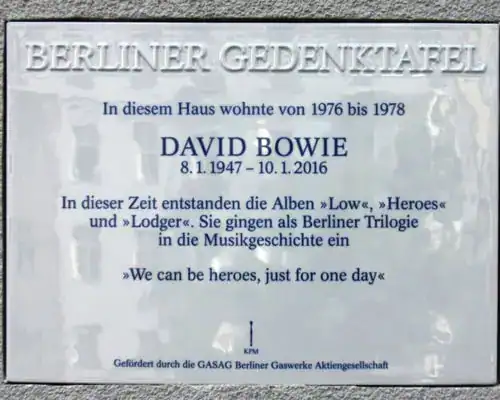
Today, Hauptstraße 155 has become a place of pilgrimage for Bowie fans. A commemorative plaque referencing the line “We can be heroes, just for one day” marks the building, though it has been repeatedly removed and replaced over time.
A large mural of Bowie now faces the street, reinforcing the building’s status as a cultural landmark.
Just a few doors away lies Neues Ufer, the café Bowie frequented during his time in Berlin, further connecting the area to his daily life.
Hauptstraße 155 in Bowie’s legacy
Hauptstraße 155 represents more than just a residence — it marks the point at which David Bowie regained control over his life and redefined his artistic identity.
Within these walls, far from fame and excess, Bowie laid the foundations for one of the most influential creative periods in modern music history.