
Hansa Studios – Berlin’s Sonic Landmark in David Bowie’s Berlin Era

Photo: Unknown photographer / Wikimedia Commons / CC BY-SA 3.0 (editorial use)
Hansa Studios, located in the Kreuzberg / Potsdamer Platz area of Berlin, is one of the most historically significant recording studios in Europe. For David Bowie, it became inseparable from his late-1970s creative rebirth — particularly during the recording of “Heroes” (1977).
Situated just a short distance from the Berlin Wall during the Cold War, the studio offered not only unique acoustics but also a powerful emotional and political atmosphere that directly influenced the music created within its walls.
- Location: Köthener Straße, Berlin (near Potsdamer Platz)
- Known as: “Hansa by the Wall”
- Bowie era: 1977–1978
- Key album: “Heroes” (1977)
- Main collaborators: Brian Eno, Tony Visconti
- Core significance: Unique acoustics + Cold War atmosphere
The Berlin context
When David Bowie relocated to West Berlin in the mid-1970s, he was seeking distance from the excesses of Los Angeles and a chance to rebuild both his personal life and artistic direction. Berlin, at the time a divided city marked by political tension and cultural experimentation, offered exactly that environment.
The presence of the Berlin Wall was not just symbolic but physically close to Hansa Studios itself. This proximity created an atmosphere of isolation, division and intensity — elements that would become deeply embedded in Bowie’s music.
From Château d’Hérouville to Hansa





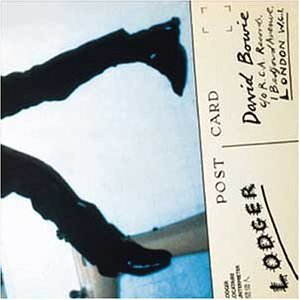
Although often associated entirely with Berlin, the so-called Berlin Trilogy did not begin at Hansa Studios. Much of Low (1977) was recorded in France at Château d’Hérouville before being completed in Berlin.
It was with “Heroes”, however, that Hansa Studios became the central creative environment. Bowie, alongside Brian Eno and Tony Visconti, fully embraced the studio’s spatial and acoustic possibilities.
The Meistersaal and the sound of “Heroes”
One of the defining features of Hansa Studios is the Meistersaal, a large hall originally designed for orchestral performances. Unlike conventional recording rooms, this space allowed for expansive sound and natural reverberation.
Tony Visconti famously used multiple microphones placed at increasing distances from Bowie’s voice while recording the track “Heroes”. As Bowie sang louder, additional microphones were triggered, gradually expanding the sonic space. This technique contributed directly to the song’s dramatic, rising intensity.
The result is one of the most recognisable vocal recordings in rock history — a performance shaped as much by the architecture of the room as by the artist himself.
Cold War atmosphere and lyrical influence
The physical location of Hansa Studios, within sight of the Berlin Wall, had a profound influence on Bowie’s work. The famous story behind “Heroes” — inspired by a couple embracing near the Wall — captures this connection between environment and artistic expression.
The surrounding landscape of division, surveillance and tension found its way into the emotional core of the music, particularly in tracks that explore themes of isolation, longing and fleeting moments of connection.
Beyond Bowie – a global recording landmark
Although Bowie helped define Hansa’s reputation, the studio became a magnet for international artists in the decades that followed. Musicians such as U2, Depeche Mode and Nick Cave would later record there, drawn by its history and distinctive sound.
Nevertheless, it remains Bowie’s Berlin period that gives Hansa its most enduring cultural identity.
Hansa Studios in Bowie’s creative universe
Hansa Studios was more than a recording facility — it was an instrument in itself. The combination of experimental technology, unconventional recording techniques and the charged atmosphere of Cold War Berlin allowed Bowie and his collaborators to redefine what a rock album could sound like.
Together with Brian Eno and Tony Visconti, Bowie developed a hybrid of electronic, ambient and rock music that would influence countless artists in the decades that followed.
As Bowie himself later reflected, this period represented one of the most complete expressions of his artistic identity — a moment where environment, technology and creativity aligned perfectly.