
Carlos Alomar & David Bowie | Guitarist Behind the Sound
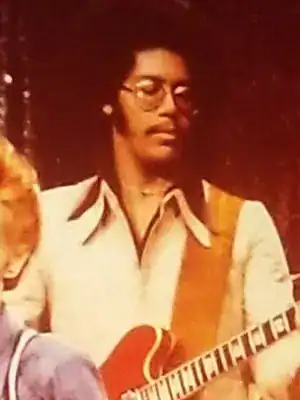
Photo: Vladimir / Wikimedia Commons / CC BY-SA 2.0 (editorial use)
Carlos Alomar is one of the most important collaborators in David Bowie’s career, serving as guitarist, musical director and creative partner across multiple defining eras. His work helped shape Bowie’s sound from the mid-1970s onward, bringing a distinctive blend of funk, soul and precision to the music.
From the breakthrough success of Fame to the experimental textures of the Berlin Trilogy, Alomar’s influence can be heard at the core of Bowie’s most innovative work.
- Name: Carlos Alomar
- Born: 7 May 1951
- Role: Guitarist, songwriter, musical director
- Bowie connection: Long-term collaborator (1970s–1990s)
- Known for: Signature guitar work on “Fame”
Early collaboration
Carlos Alomar first began working with David Bowie in the mid-1970s, during a period of significant artistic transformation. Coming from a background in rhythm and blues, Alomar brought a new groove-oriented approach to Bowie’s music.
This collaboration would quickly prove essential, as Bowie moved away from glam rock into a more rhythm-driven and experimental sound.
“Fame” and breakthrough success
One of the most famous results of their collaboration is the song Fame (1975), co-written with John Lennon. Alomar’s distinctive guitar riff became the backbone of the track, helping it reach number one in the United States.
The song marked a turning point, introducing a funk-influenced style that would define Bowie’s mid-1970s output.
Young Americans and soul influence
During the Young Americans era, Alomar played a key role in shaping Bowie’s “plastic soul” sound. His rhythmic precision and musical sensibility grounded the album’s complex arrangements.
This period demonstrated Bowie’s willingness to absorb and reinterpret American musical styles, with Alomar acting as a crucial guide.
The Berlin Trilogy
Alomar’s influence continued into Bowie’s Berlin period, contributing to albums such as Low, Heroes and Lodger. His guitar work adapted to Bowie’s increasingly experimental direction, blending structure with abstraction.
This flexibility made him an essential collaborator, capable of evolving alongside Bowie’s changing artistic vision.
Musical director and live performances
Beyond studio recordings, Carlos Alomar served as Bowie’s musical director for many live tours. He helped translate complex studio material into powerful live performances, maintaining musical cohesion across changing line-ups.
His leadership ensured that Bowie’s live shows retained both precision and energy.
Video
Carlos Alomar on working with David Bowie
Long-term influence
Carlos Alomar remained connected to Bowie’s work for decades, contributing not only as a musician but as a creative partner. His influence is woven into some of the most important recordings in Bowie’s catalogue.
His ability to combine technical skill with artistic sensitivity made him one of Bowie’s most trusted collaborators.
Place within Bowie’s universe
Within David Bowie’s broader creative universe, Carlos Alomar represents the musician who helped translate vision into sound. His contributions were not always in the spotlight, but they were essential to the final result.
Together, Bowie and Alomar created a body of work that continues to influence musicians across genres.