
Victoria & Albert Museum – David Bowie Is Exhibition and Archive Legacy

Photo: Unknown photographer / Wikimedia Commons / CC BY-SA 3.0 (editorial use)
The Victoria and Albert Museum (V&A) in London is one of the world’s leading museums of art, design, performance, and visual culture. Its connection with David Bowie represents one of the most important museum collaborations ever devoted to a modern music artist.
Through the landmark exhibition David Bowie Is and the acquisition of Bowie’s archive, the V&A has become a central institution in preserving and presenting Bowie’s artistic legacy.
- Location: South Kensington, London
- Opened: 1852
- Focus: Art, design, fashion, performance
- Bowie link: David Bowie Is exhibition (2013–2018, touring)
- Archive: Permanent Bowie archive acquired by V&A (announced 2023)
- New facility: David Bowie Centre – V&A East Storehouse
The V&A as a cultural institution
Founded in the mid-19th century, the Victoria and Albert Museum was created to celebrate craftsmanship, innovation, and artistic excellence across disciplines. Over time, it expanded its scope to include fashion, theatre, music performance, and contemporary culture.
This broad cultural focus made the V&A uniquely suited to engage with an artist like David Bowie, whose work transcended music and moved into design, identity, performance, and visual storytelling.
“David Bowie Is” (2013)

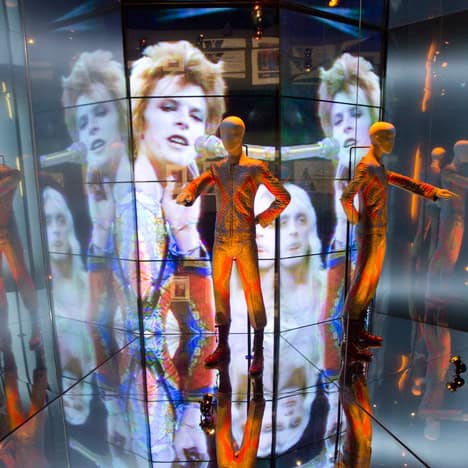
The exhibition David Bowie Is opened at the V&A in March 2013 and quickly became one of the most successful and influential exhibitions in the museum’s history.
Drawing from Bowie’s personal archive, the exhibition featured over 300 objects, including costumes, handwritten lyrics, instruments, stage designs, photography, and multimedia installations.
Rather than presenting a conventional biography, the exhibition explored Bowie as a total artist — combining sound, fashion, theatre, and identity into a unified creative language.
After its London debut, David Bowie Is toured internationally between 2013 and 2018, reaching cities including Tokyo, Berlin, New York, Melbourne and Barcelona, attracting over two million visitors worldwide.
A new understanding of Bowie as an artist
The exhibition fundamentally changed how Bowie was perceived in cultural institutions. He was no longer viewed solely as a musician, but as a multidisciplinary artist whose work belonged alongside major figures in design, theatre and visual culture.
The V&A’s approach emphasised process — showing how Bowie constructed personas, collaborated with designers, and used visual language as an extension of music.
The David Bowie Archive (V&A acquisition)
In 2023, it was officially announced that the Victoria and Albert Museum had acquired David Bowie’s personal archive.
This archive contains over 80,000 items, including:
- Costumes and stage outfits
- Original lyrics and notebooks
- Design sketches and artwork
- Photographs and film material
- Personal correspondence and creative documents
This acquisition secured Bowie’s legacy within one of the world’s most important cultural institutions.
David Bowie Centre – V&A East Storehouse

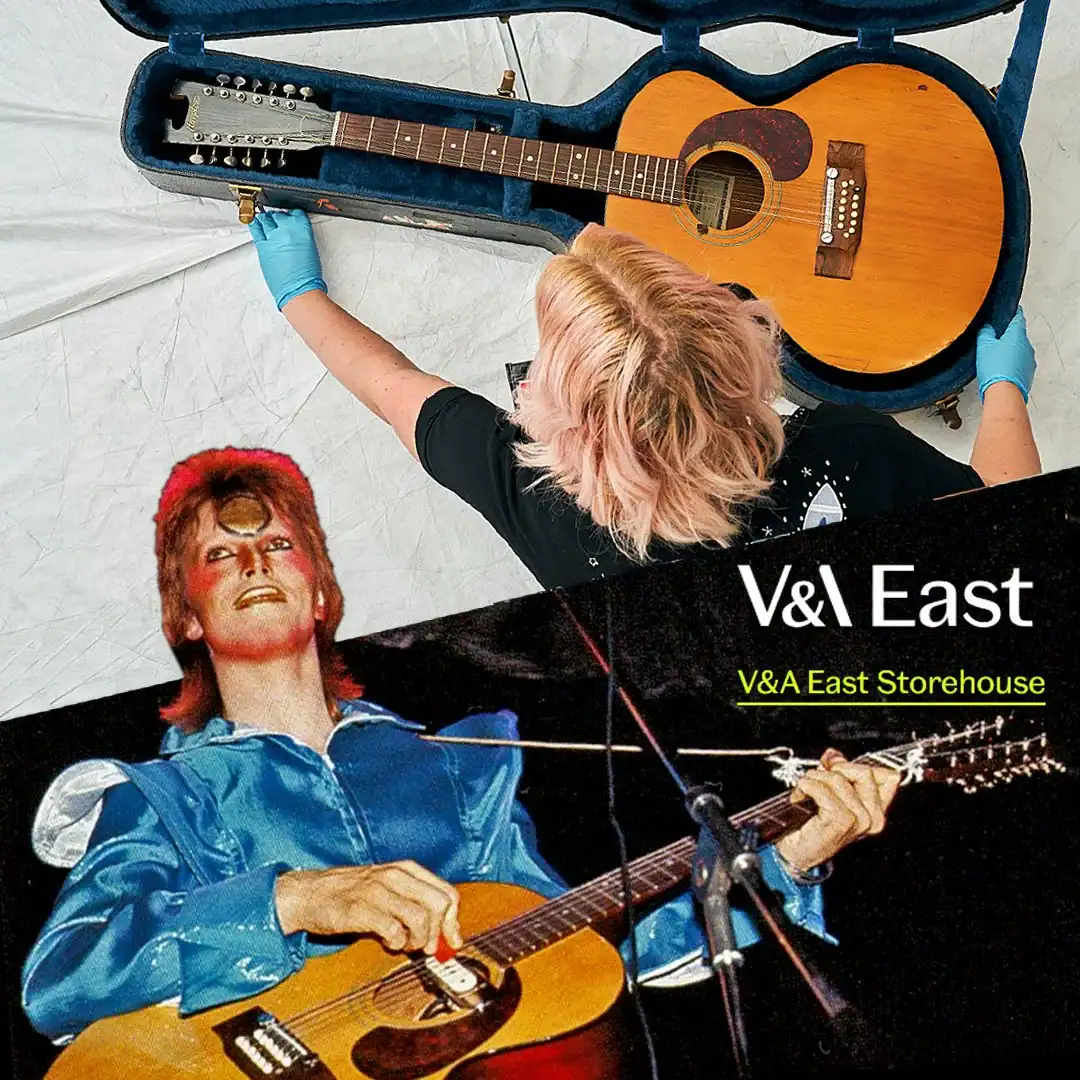
The Bowie archive will be housed in the new David Bowie Centre, located within the V&A East Storehouse in East London.
This facility is designed as a public-facing archive space, allowing visitors to engage directly with Bowie’s creative materials.
The concept moves beyond traditional exhibitions: visitors will be able to book access to view selected items and curated displays, creating a more intimate and research-driven experience.
This represents a major shift in how music archives are presented — from passive viewing to active exploration.
Why the V&A matters in Bowie’s legacy
The relationship between David Bowie and the Victoria and Albert Museum reflects a broader recognition of popular music as a serious cultural force.
By placing Bowie within its permanent collection and dedicating an archive centre to his work, the V&A confirms his status not only as a performer, but as a defining creative figure of the modern era.
The museum does not simply preserve Bowie’s past — it provides a framework through which future generations can understand how his work was created, developed, and realised.