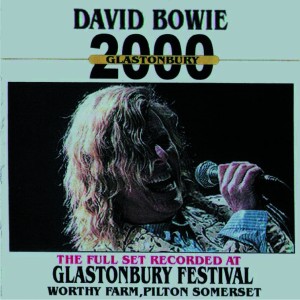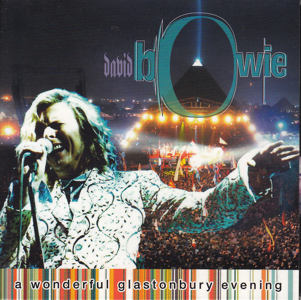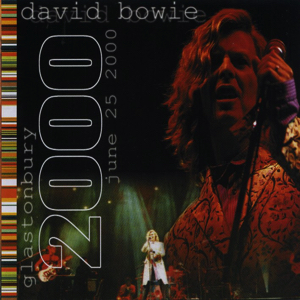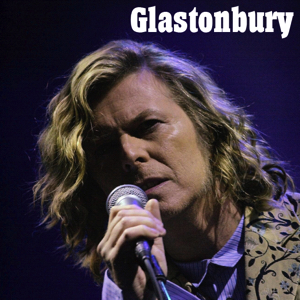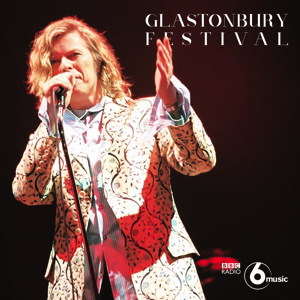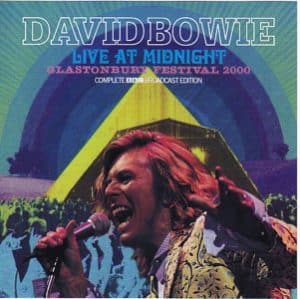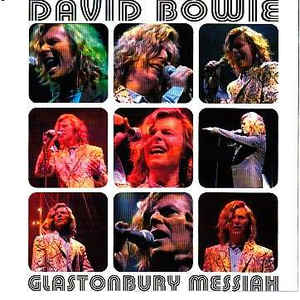
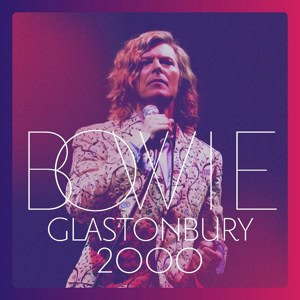
David Bowie – Glastonbury Festival (2000)
On June 25, 2000, David Bowie returned to the Glastonbury Festival as the headline act, delivering one of the most celebrated performances of his later career. Nearly three decades after his sunrise appearance in 1971, Bowie stood before a vast audience as a fully established musical legend.
The performance was widely regarded as a triumphant return — not only to Glastonbury, but to a central position within contemporary music culture. For many in attendance, it represented a rare opportunity to witness Bowie’s extensive catalogue performed live at its highest level.
Blending theatrical presence with musical precision, Bowie delivered a set that balanced nostalgia with renewed energy, reaffirming his enduring relevance.
- Name: David Bowie (David Robert Jones)
- Date of birth: 8 January 1947
- Date of death: 10 January 2016
- Role: Headliner
- Event: Glastonbury Festival 2000
The context of Glastonbury 2000
By the year 2000, Glastonbury had evolved into one of the world’s most important music festivals. What began as a countercultural gathering had grown into a global cultural institution, attracting massive audiences and international media attention.
Bowie’s selection as headliner reflected both his historical significance and his continued artistic presence. It also marked a symbolic bridge between the festival’s origins and its modern identity.
Bowie at the turn of the millennium
At the time of his Glastonbury performance, Bowie had already achieved decades of success, continuously reinventing his sound and image. Albums such as Earthling (1997) and Hours… (1999) demonstrated his willingness to explore new directions while maintaining a connection to his past.
His Glastonbury set would draw on this wide-ranging catalogue, offering a retrospective of his career while presenting it through a contemporary lens.
The performance
Taking the stage as the headline act, Bowie delivered a carefully structured set designed to engage both long-time fans and newer audiences. His performance combined musical precision with a strong visual presence, supported by a tight and experienced backing band.
Unlike the intimacy of his 1971 appearance, this performance was expansive and confident, reflecting his status as a global icon.
Setlist
- Wild Is the Wind
- China Girl
- Changes
- Stay
- Life on Mars?
- Rebel Rebel
- Little Wonder
- Ashes to Ashes
- Fashion
- Fame
- All the Young Dudes
- The Man Who Sold the World
- Station to Station
- Starman
- Hallo Spaceboy
- Under Pressure
- Ziggy Stardust
- Heroes
- Let’s Dance
Audience reaction
The audience response was overwhelmingly positive, with many critics and fans describing the performance as one of the highlights of the festival. Bowie’s ability to connect across generations was particularly evident, as his music resonated with both older fans and a younger audience experiencing him live for the first time.
The atmosphere was celebratory, with a sense of shared recognition of Bowie’s cultural importance.
From 1971 to 2000
Bowie’s return to Glastonbury created a powerful narrative arc. His 1971 sunrise set had captured him at the beginning of his journey, while the 2000 performance presented him at the height of his legacy.
This contrast illustrates one of the most remarkable evolutions in modern music history — from emerging artist to enduring icon.
Historical significance
The Glastonbury 2000 performance is widely regarded as one of Bowie’s greatest live appearances. It demonstrated not only his enduring popularity, but also his ability to reinterpret his own catalogue for new audiences.
The concert has since been released in various formats, further cementing its status as a key moment in his live career.
YouTube – Glastonbury 2000
David Bowie – Glastonbury Festival 2000 (headline performance)
The Bootlegs Glastonbury 2000