
Bob Evans – Saxophone and Flute in David Bowie’s Riot Squad Period
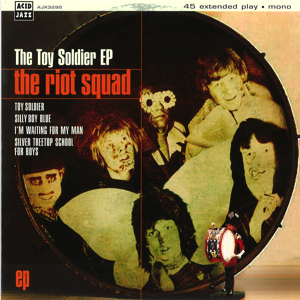
Image: No image available / placeholder / editorial use
Bob Evans was the saxophone and flute player in The Riot Squad, the British R&B and pop group briefly fronted by David Bowie in 1967.
His importance in Bowie’s story lies in a short but revealing transitional period, when Bowie was moving away from conventional mid-1960s pop and R&B toward a more theatrical, experimental and self-directed artistic identity.
- Name: Bob Evans
- Band: The Riot Squad
- Role: Tenor saxophone, flute, vocals
- Bowie connection: Member of The Riot Squad during Bowie’s brief 1967 involvement
- Period with Bowie: Spring 1967
The Riot Squad before Bowie
The Riot Squad began as a British R&B and pop group in the mid-1960s. The band’s early history is complicated, with several line-up changes and different phases before David Bowie entered the picture.
Bob Evans was one of the key figures associated with the group’s continuity. He played tenor saxophone and flute, and helped carry the Riot Squad name forward after earlier members departed.
Bob Evans as band leader and front-line player
Evans was not simply a background horn player. In the Riot Squad story, he appears as a front-line musician and organiser, helping to rebuild the band after personnel changes and keeping the name active when the group was searching for a new direction.
His role on saxophone and flute gave the group a broader sound than a standard guitar-bass-drums line-up. That flexibility became important when Bowie joined and began pushing the act toward more theatrical and unusual material.
Bowie joins The Riot Squad
In early March 1967, the band divided, and Bob Evans began searching for a new lead singer. He saw David Bowie performing with The Buzz and thought that he was fantastic. Evans approached him and Bowie agreed to join.
Though Bowie had a growing reputation in London, like the Riot Squad he lacked a hit record at the time.
A short but important period
Bowie’s time with The Riot Squad was brief, often described as lasting around a dozen weeks and approximately twenty live performances between March and May 1967.
This period remains poorly documented but provides a fascinating insight into Bowie’s transitional phase.
Theatrical stage ideas
During this period, the band’s stage act became increasingly unconventional. Bowie pushed the group toward more theatrical performance, including make-up, props, and surreal stage behaviour.
Bob Evans embraced this direction, becoming an even more visible performer with his saxophone and flute.
Little Toy Soldier and experimental direction
Bowie introduced original compositions such as “Little Toy Soldier”, reflecting his growing interest in theatrical storytelling and darker subject matter.
The track shows Bowie moving away from straightforward pop toward something more conceptual and experimental.
I’m Waiting For The Man
Bowie also introduced “I’m Waiting For The Man” by The Velvet Underground into the band’s set, demonstrating his early interest in underground American music.
This would later become a key influence on his own artistic development.
Singles and releases
The Riot Squad released several singles on Pye during the 1960s, including “Cry, Cry, Cry”, “I Take It That We’re Through” and “Gotta Be a First Time”.
However, the recordings made with David Bowie, including “Little Toy Soldier” and “I’m Waiting For The Man”, were not issued at the time.
As a result, Bowie’s Riot Squad period remained largely undocumented in 1967, contributing to its later cult status among collectors.
Posthumous releases


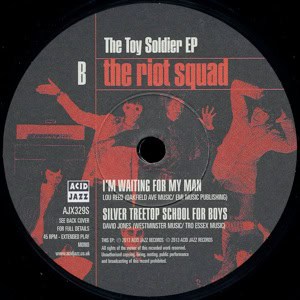
Recordings made by David Bowie with The Riot Squad in 1967 were not released at the time. These sessions remained unheard for decades and only surfaced later through archival releases.
In 2013, material from these recordings was officially issued on releases such as The Toy Soldier, making the Bowie-era Riot Squad sessions widely available for the first time.
These recordings include early versions of songs such as “Toy Soldier”, “Silly Boy Blue”, and a cover of “I’m Waiting for the Man”.
Legacy
Bob Evans remains a figure tied to one of the most intriguing early chapters in Bowie’s career.
His work with The Riot Squad represents a bridge between Bowie’s early R&B period and the more experimental direction that would soon define him.