
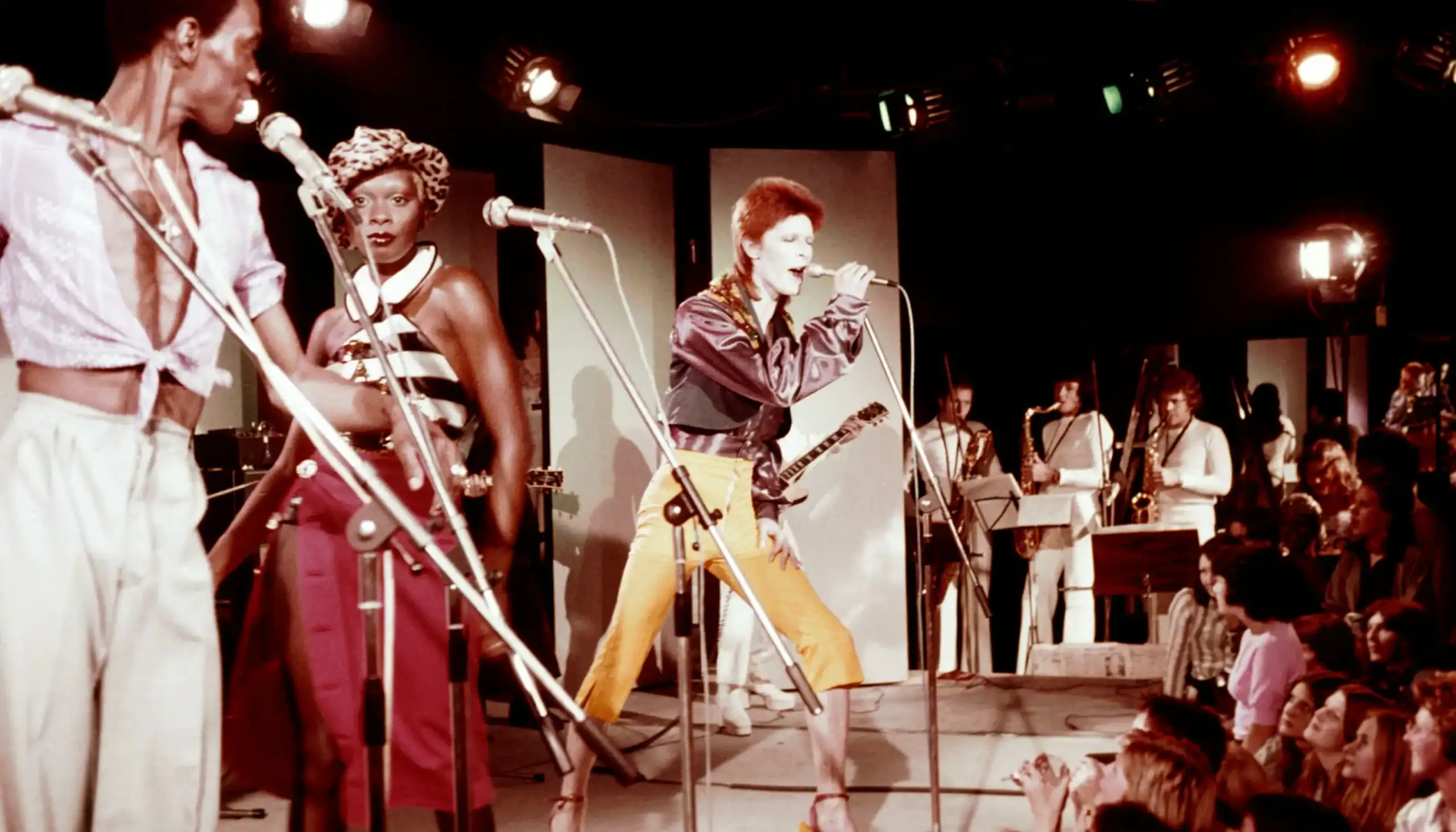
Ava Cherry and David Bowie during the 1973 period connected to The Astronettes

Photo: Unknown photographer / David Bowie World collection / editorial use

The Astronettes were a short-lived but historically important vocal trio connected to David Bowie during the intense creative period between Pin Ups, Diamond Dogs and the first steps toward Young Americans.

The group consisted of Ava Cherry, Jason Guess and Geoff MacCormack, also known in Bowie’s circle as Warren Peace. Their recordings were produced by Bowie in London in late 1973 and early 1974, but the project was shelved before it could become a finished commercial album.

Key facts
  • Members: Ava Cherry, Jason Guess, Geoff MacCormack / Warren Peace
  • Role: Vocal trio and Bowie-produced side project
  • Produced by: David Bowie
  • Main sessions: December 1973 – January 1974, London
  • Studio context: Olympic Sound Studios, Barnes, London
  • Status: Shelved in the 1970s
  • Later releases: People From Bad Homes and Ava Cherry: The Astronettes Sessions
  • Importance: Transitional bridge between glam, Diamond Dogs and Bowie’s soul direction

Where The Astronettes fit in Bowie’s timeline

The Astronettes occupy a crucial hinge moment in Bowie’s career. They emerged after the peak of Ziggy Stardust and the release of Aladdin Sane, but before Bowie fully committed to the American soul direction that would define Young Americans.

In late 1973 and early 1974, Bowie was working with extraordinary speed. He had recently completed Pin Ups, was moving toward the darker theatrical world of Diamond Dogs, and was also exploring production, arrangement and artist-development work beyond his own records.

The concept behind the trio

The Astronettes were not meant to be just another set of anonymous backing singers. Bowie appears to have imagined them as a separate vocal act: a stylised trio built around harmony, soul, rhythm and personality.

That distinction matters. The project shows Bowie thinking not only as a performer, but also as a producer and concept-maker. He was shaping songs, voices and image into a possible new act, while also testing musical ideas that would later return in his own work.

Members and Bowie’s inner circle

Ava Cherry was closely connected to Bowie personally and creatively during this period. She was also part of the vocal world around Bowie’s 1973 television project The 1980 Floor Show, where glam theatre, soul inflection and staged identity came together.

Geoff MacCormack, Bowie’s longtime friend and touring companion, was already deeply embedded in Bowie’s working life. Under the name Warren Peace, he would later appear in Bowie’s orbit as vocalist, collaborator and witness to the mid-1970s transition.

Jason Guess was the third voice in the trio. Together, Cherry, Guess and MacCormack formed a project that was close to Bowie’s private creative circle rather than a conventional outside signing.

Recording sessions and musicians

The Astronettes sessions began in December 1973 and continued into January 1974. Bowie produced the recordings in London during the same broad period in which he was also developing Diamond Dogs.

The backing musicians connected to the sessions included several important Bowie associates, among them Herbie Flowers, Mike Garson and Aynsley Dunbar, with guitarist Mark Pritchett also documented in the session context. This gave the recordings a strong connection to Bowie’s working band world, even though the project itself remained unreleased at the time.

Core Astronettes songs

The surviving Astronettes material is especially valuable because several songs contain early versions, fragments or ideas that later resurfaced in Bowie’s own catalogue.

  • I Am a Laser — later reworked by Bowie into Scream Like a Baby for Scary Monsters.
  • I Am Divine — widely regarded as an early ancestor of Somebody Up There Likes Me.
  • People From Bad Homes — historically important for its title and lyric idea, later echoed in Bowie’s writing.
  • Things to Do — a rougher experiment showing Bowie’s interest in Latin, rock and soul ingredients.
  • God Only Knows — a version of the Beach Boys song, years before Bowie recorded his own version for Tonight.
  • Having a Good Time — a lighter Bowie-written piece showing the project’s more theatrical side.

I Am a Laser and the road to Scary Monsters

I Am a Laser — early Bowie composition later reshaped as Scream Like a Baby

I Am a Laser is the most important surviving Astronettes track for Bowie historians. It is not simply a curiosity: it is an early draft-world for a song Bowie would later transform into Scream Like a Baby on Scary Monsters.

The later Bowie version is tighter, darker and more fully realised, but the Astronettes recording allows listeners to hear the seed of the idea before it was rebuilt for a very different era of Bowie’s music.

People From Bad Homes and later releases

The Astronettes album was not released in the 1970s. Decades later, the recordings circulated under titles including People From Bad Homes and later Ava Cherry: The Astronettes Sessions. These releases made the project available to collectors and Bowie researchers, but they also underline how unfinished and transitional the material was.

That unfinished quality is part of the fascination. The recordings are not polished soul-pop masterpieces; they are working documents from a moment when Bowie was testing how far he could move away from glam rock without yet knowing the final shape of his next identity.

Why the project was shelved

The Astronettes were set aside as Bowie’s attention moved quickly toward Diamond Dogs and then toward America. The material also appears to have been caught up in wider business and management circumstances around Bowie’s career at the time.

Rather than treating the project as a failure, it is more accurate to see it as a creative false start with real consequences. Bowie did not release the Astronettes album, but he carried parts of its musical thinking forward.

From glam theatre to soul language

The Astronettes reveal Bowie in transition from the theatrical rock persona of Ziggy Stardust and Aladdin Sane toward a new fascination with soul, R&B, vocal arrangement and groove. The sessions are not yet Young Americans, but they point toward the questions Bowie was beginning to ask.

How could he use backing voices differently? How could rhythm and harmony change the emotional temperature of his songs? How could he move from British glam theatre into a more American, soul-informed sound without simply imitating it?

The Astronettes and The 1980 Floor Show

The Astronettes were linked to Bowie’s 1980 Floor Show period, a moment when he staged himself at the edge of glam’s exhaustion and his next transformation. The trio’s presence around that world helps explain why the project feels so theatrical even when the music moves toward soul and R&B.

They belonged to the same unstable, experimental zone: late glam, early soul, cabaret, television spectacle and studio sketchbook all overlapping at once.

Why The Astronettes matter in Bowie’s story

The Astronettes matter because they show Bowie using collaboration as a laboratory. He could test voices, styles and song ideas without the full pressure of a major David Bowie release.

In hindsight, the project forms a vital bridge between Diamond Dogs and Young Americans. It captures Bowie in the act of becoming something new: not yet the plastic soul singer, no longer simply the glam alien, but an artist searching for the next mask through other people’s voices.

Astronettes recordings and Bowie mythology

The Astronettes — rare material from Bowie’s 1973–1974 transition

The Astronettes recordings are best heard as a map of possibilities. Some tracks are rough, some are uneven, and some feel closer to sketches than finished masters, but together they reveal Bowie’s next direction beginning to take shape.

For Bowie collectors and historians, that makes the project essential. It is not a lost Bowie masterpiece, but it is one of the clearest surviving documents of how Bowie moved from glam rock into soul.

Legacy

The Astronettes were short-lived, but their importance is larger than their discography. The project gave Ava Cherry, Jason Guess and Geoff MacCormack a brief identity as a Bowie-produced vocal group, while also giving Bowie a private workshop for ideas that would echo through later albums.

The sessions connect Diamond Dogs, Young Americans, Scary Monsters and even Tonight in unexpected ways. That makes The Astronettes one of Bowie’s most revealing side projects: unfinished, uneven, but historically rich.

Leave a comment