
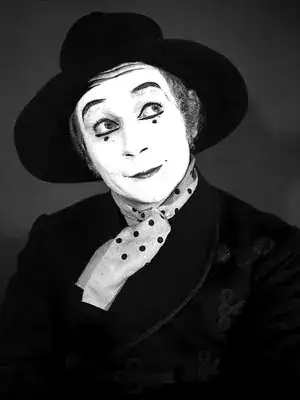
Lindsay Kemp – British mime artist, dancer, choreographer and teacher whose influence on Bowie
Photo: Allan Warren / Wikimedia Commons / CC BY 2.0 (editorial use)
Lindsay Kemp was a British mime artist, dancer, choreographer and teacher whose influence on David Bowie was both profound and enduring. More than a collaborator, Kemp served as a mentor who helped Bowie unlock the physical and theatrical dimensions of performance that would define his career.
Bowie repeatedly credited Kemp as one of the most important figures in his artistic development, particularly during the formative years of the late 1960s.
- Born: 1938, England
- Died: Livorno, 24 augustus 2018
- Profession: Mime artist, dancer, teacher
- Bowie connection: Mentor, choreographer, performer
Early career and theatrical vision
Lindsay Kemp trained in classical dance and mime, developing a theatrical style that fused movement, emotion and visual storytelling. His work drew on traditions of silent cinema, European mime and avant-garde theatre, placing the body at the centre of emotional expression.
Kemp’s performances were unapologetically expressive, often exaggerated, and deeply attuned to themes of desire, longing and transformation.
Meeting David Bowie
David Bowie met Lindsay Kemp in the late 1960s and became one of his students. At the time, Bowie was searching for new ways to express identity, character and emotion beyond conventional pop performance.
Under Kemp’s guidance, Bowie learned mime techniques, physical control and how to communicate narrative through gesture and posture rather than words alone.
Artistic Philosophy and Teaching
Lindsay Kemp was not only a performer, but a teacher with a highly distinctive artistic philosophy. His work centred on the idea that movement could express emotional truth more directly than words, and that the body itself could become a complete storytelling instrument.
His performances combined mime, dance and theatrical imagery into a slow, deliberate style of expression in which gesture, timing and physical control were essential. Rather than traditional acting, Kemp encouraged performers to explore identity through exaggeration, transformation and visual presence.
When David Bowie studied under Kemp in the late 1960s, he was introduced to this approach in depth. Kemp’s teaching focused on freeing the performer from physical inhibition, allowing movement, posture and gesture to become an extension of inner emotion.
This philosophy would become central to Bowie’s artistic development. It shaped not only his stage movement, but also his understanding of performance as a fusion of music, theatre and visual identity — a concept that would later define his most iconic work.
Stagecraft and movement
Kemp’s influence is most clearly visible in Bowie’s stage movement and theatrical awareness. Bowie learned to inhabit characters physically, using stance, gaze and movement to convey psychological depth.
This training directly informed Bowie’s later personas, including Ziggy Stardust, where posture and gesture were as important as costume and sound.
Shared performances
Bowie and Kemp also collaborated directly on stage. Bowie performed in Kemp’s production Pierrot in Turquoise, where his physical performance demonstrated the extent to which he had absorbed Kemp’s teachings.
These performances reinforced Bowie’s confidence as a performer capable of blending music, theatre and visual art into a single expressive form.
Long-term influence
Even decades later, Bowie spoke openly about Kemp’s importance, describing him as someone who taught him “how to use his body as an instrument.”
Kemp’s influence extended beyond specific performances, shaping Bowie’s lifelong approach to character, transformation and stage presence.
Legacy
Lindsay Kemp’s legacy within David Bowie’s world is foundational. Without Kemp’s guidance, Bowie’s evolution into a fully realised theatrical artist may have taken a very different path.
Kemp remains one of the clearest examples of how Bowie’s greatness was nurtured not only through music, but through deep engagement with movement, theatre and visual storytelling.