
Was Aladdin Sane Really a Bowie & Ronson Album?
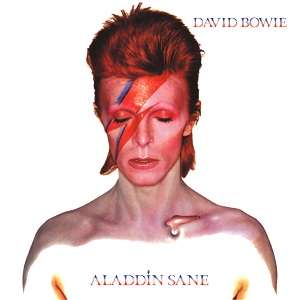
Image: David Bowie World collection / editorial use
When David Bowie announced at Hammersmith Odeon on 3 July 1973 that it was “the last show that we’ll ever do”, many fans believed they were witnessing the sudden end of Ziggy Stardust and the Spiders from Mars. But the truth behind that moment had already been unfolding for months.
At the centre of that story sits Aladdin Sane. More than just the follow-up to Ziggy Stardust, the album may reveal a shift in power — one that places Bowie and Mick Ronson at the core, while the rest of the band began moving toward the background.
- Album: Aladdin Sane
- Released: April 1973
- Main figures: David Bowie, Mick Ronson, Trevor Bolder, Woody Woodmansey, Mike Garson
- Key moment: Hammersmith Odeon – 3 July 1973
- Theme: End of the Spiders from Mars
The shock at Hammersmith
For the audience at Hammersmith Odeon, Bowie’s words sounded like a dramatic ending. Some thought he was retiring entirely. Others later understood it as the death of Ziggy Stardust. But for the musicians around him, it marked something much more real: the collapse of a working band.
The moment became legendary, but it did not come out of nowhere. Behind the scenes, tensions had been building during the entire Ziggy and Aladdin Sane period.
Not really a band?
The Spiders from Mars looked like a tight, unified group. On stage, they were one of the most iconic bands of the early 1970s. But structurally, they were not equal partners.
They were musicians working within Bowie’s project and the MainMan management system. Paid differently, credited differently, and increasingly positioned differently, the idea of a “band” was already starting to fracture.
The clue in the album credits
One of the most telling details appears directly on the Aladdin Sane sleeve.
Instead of presenting all musicians equally, the album states: “Played by David Bowie & Mick Ronson.”
Only after that do Trevor Bolder and Woody Woodmansey appear, followed by additional musicians such as Mike Garson. This creates a clear hierarchy:
- Bowie & Ronson (core)
- Bolder & Woodmansey (support)
- Additional players (extra layer)
Whether intentional or not, this presentation suggests that the centre of gravity had already shifted.
Ronson’s future was already planned
Mick Ronson was not just a guitarist — he was Bowie’s musical partner, arranger and on-stage counterpart. By 1973, however, he was also being prepared for a solo career under MainMan.
This changed the internal balance. While Bowie was moving forward, Ronson was being positioned separately, and the rest of the band were left in a more uncertain situation.
Money and tension
Differences in pay and status created frustration. Reports from the period suggest that not all musicians were treated equally, which led to tension within the group.
For a band that looked unified to the public, the reality was becoming increasingly divided.
Mike Garson and internal friction
Mike Garson’s arrival added a new musical dimension to Bowie’s sound, especially with his avant-garde piano playing. However, his strong personal beliefs and attempts to share them also contributed to tension within the touring environment.
This was not the sole reason for the band’s breakup, but it added another layer to an already complex situation.
After Hammersmith
Only days after the final Ziggy show, Bowie moved on to recording Pin Ups. By that point, the Spiders as a unit were effectively finished.
Some members were dismissed, others briefly returned, and the structure that had defined the Ziggy era was gone.
So… was it really a Bowie & Ronson album?
Not entirely. The contributions of Bolder, Woodmansey and Garson were essential to the sound of Aladdin Sane.
But the way the album was presented — combined with the musical direction and internal dynamics — strongly suggests that Bowie and Ronson stood at the centre in a way that differed from the earlier Ziggy era.
In that sense, Aladdin Sane can be seen as both:
- The final flash of the Spiders from Mars
- The first clear step beyond them
The myth vs reality
The myth is simple: Bowie ended the band in one shocking sentence on stage.
The reality is more complex. The ending had already begun long before that night — through management decisions, artistic ambition, financial tension and the natural evolution of Bowie’s career.
Aladdin Sane did not just follow Ziggy Stardust. It quietly revealed that the story was already coming to an end.