
Leslie Conn – David Bowie’s First Manager
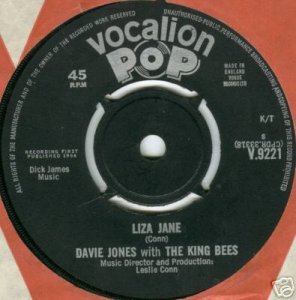
Leslie Conn was a London-based manager and producer who played a small but important role in the earliest stage of David Bowie’s career. He is best known as Bowie’s first manager and the producer of his debut single “Liza Jane” (1964).
Although Conn’s time with Bowie was brief, his involvement marked Bowie’s transition from aspiring performer to recording artist, securing his first record deal and helping him gain early media exposure.
- Role: Manager, producer
- Born: Stamford Hill, London 14 December 1929
- Died: Marble Arch, London 13 December 2008
- Worked with Bowie: 1964–1965
- Key project: “Liza Jane” (1964)
- Associated acts: The King Bees, The Manish Boys
How Conn met Bowie
In early 1964, David Jones (later David Bowie) actively sought a manager to help launch his career. In a bold move, he wrote to entrepreneur John Bloom, asking him to back his band and guide them to success in the way Brian Epstein had done for The Beatles.
Bloom declined direct involvement but referred Bowie to Leslie Conn, who at the time worked as a small-scale manager and talent scout linked to the Dick James Organisation.
The King Bees and “Liza Jane”
Conn took on Bowie’s band Davie Jones & The King Bees and quickly secured a recording opportunity. He produced the group’s debut single, “Liza Jane”, released in June 1964 on the Decca subsidiary Vocalion Pop.
The track was a rearrangement of the traditional song “Li’l Liza Jane”, but Conn took the songwriting credit — a common industry practice at the time, often tied to publishing rights and royalties.
Despite promotion and exposure, the single failed commercially, and Bowie soon left The King Bees in search of new opportunities.
The Manish Boys and media exposure
Conn continued working with Bowie by placing him in another rhythm and blues group, The Manish Boys. He attempted to generate publicity by emphasizing Bowie’s image and individuality, including his notably long hair — still unusual in mainstream British media at the time.
This led to a notable BBC television appearance in which Bowie was presented as the “president” of the Society for the Prevention of Cruelty to Long-Haired Men, an early example of Bowie’s instinct for combining identity, media and performance.
Conn also secured the band a place on a package tour alongside artists such as Gerry & the Pacemakers, Marianne Faithfull and The Kinks, giving Bowie valuable live experience.
Working Style and Limitations
Leslie Conn was known within the London music scene as an enthusiastic and persistent promoter, but his resources and industry influence were limited. Unlike more established managers of the time, he lacked the financial backing and long-term infrastructure needed to fully develop emerging artists.
Although he recognised David Bowie’s potential at an early stage, Conn was unable to secure the level of support required to turn that potential into commercial success. His approach relied heavily on short-term promotion, media exposure and personal contacts, rather than sustained artist development.
This imbalance ultimately contributed to the end of their working relationship. Bowie’s ambitions were rapidly growing, while Conn’s capabilities remained limited to small-scale management within the British rhythm and blues circuit.
Despite this, Conn’s belief in Bowie’s talent was genuine, and his early efforts helped establish the foundations of Bowie’s professional career.
End of the partnership
Despite Conn’s efforts, Bowie’s career failed to gain significant traction during this period. By 1965, still performing as David or Davy Jones, he had yet to achieve a breakthrough.
Bowie and Conn amicably ended their professional relationship in 1965, allowing Bowie to pursue new management and creative directions.
Final collaboration
Conn made one final minor contribution to Bowie’s recordings by providing backing vocal chants on the 1965 single “Baby Loves That Way”.
Legacy
While Leslie Conn’s role in David Bowie’s career was brief, it was historically significant. He helped facilitate Bowie’s first professional recording, his first record deal, and his earliest national exposure.
Though Bowie would soon move on to more influential managers, Conn’s involvement represents the very first step in Bowie’s long journey from David Jones to David Bowie.