
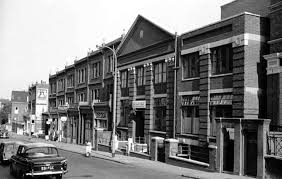
David Bowie – Decca Studios (London)
Photo: Unknown photographer / Wikimedia Commons / CC BY-SA (editorial use)
Decca Studios in London played a role in the earliest recording phase of David Bowie’s career, during a time when he was still searching for musical direction and identity. Before achieving recognition, Bowie recorded material in professional environments such as Decca, gaining valuable studio experience.
These sessions belong to Bowie’s pre-fame period, when he was experimenting with styles ranging from pop to theatrical influences, laying the groundwork for his later breakthroughs.
- Location: London
- Type: Recording studio
- Period: Mid to late 1960s
- Bowie connection: Early recording sessions
- Career phase: Pre-breakthrough
Early recording opportunities
During the mid-1960s, David Bowie was still developing his identity as an artist. Recording at studios such as Decca provided him with the opportunity to experiment in a professional setting, even before he had established a clear musical direction.
These early sessions reflect a period of exploration, where Bowie moved between different styles and influences while trying to find his own voice.
The Decca connection
Decca Studios were part of the wider infrastructure of the British music industry, offering high-quality recording facilities to a range of artists. For Bowie, access to such a studio environment was an important step in gaining experience and understanding the recording process.
Although his time here did not immediately lead to commercial success, it contributed to his growing confidence as a recording artist.
Searching for direction
This phase of Bowie’s career was marked by uncertainty but also by creative ambition. He experimented with pop, theatrical performance, and storytelling, often shifting styles from one session to another.
The work done in studios like Decca reflects this search for identity, which would later become one of the defining aspects of his career.
From early sessions to breakthrough
While the recordings associated with Decca Studios did not immediately achieve major success, they formed part of the foundation that led to Bowie’s later breakthroughs.
The experience gained during these sessions helped prepare him for the more focused and successful recordings that followed in the late 1960s and early 1970s.
Part of Bowie’s studio journey
Decca Studios should be seen as one of several important recording locations in Bowie’s early career, alongside Olympic Studios and Trident Studios. Each studio contributed to different stages of his development.
Together, they illustrate the progression from experimentation to artistic clarity.
Video
David Bowie reflecting on his early career and development
Historical significance
Decca Studios represent an early chapter in David Bowie’s journey, highlighting the importance of experimentation and persistence. Even without immediate success, these sessions played a role in shaping his future direction.
They stand as a reminder of the formative years that preceded one of the most influential careers in modern music.
Place within Bowie’s early years
Within the broader timeline of Bowie’s career, Decca Studios illustrate the beginning of his relationship with professional recording environments. It marks the stage where ambition met opportunity, even before recognition followed.
From these early efforts would eventually emerge the artist who redefined popular music.