
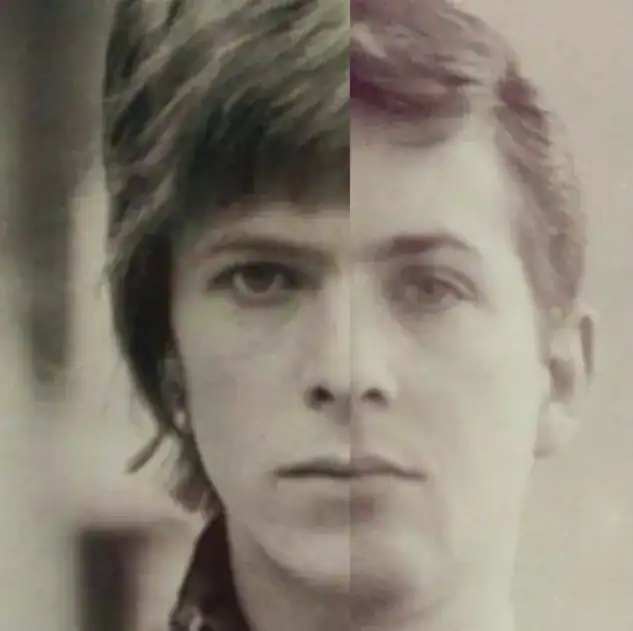
Photo: Unknown photographer / Wikimedia Commons / CC BY-SA — Wikimedia file page
Terry Burns was David Bowie’s half-brother and one of the most profound influences on his early artistic development.
Although not a musician himself, Burns introduced Bowie to modern jazz and a broader intellectual world, helping shape the emotional and artistic depth that would define Bowie’s work.
- Born: 1937
- Died: 16 January 1985 (suicide at a train station)
- Relation: Half-brother of David Bowie
- Known for: Early influence on Bowie’s musical direction
Early influence and musical awakening
Terry Burns played a crucial role in Bowie’s formative years. Older and more intellectually curious, he exposed Bowie to music far beyond mainstream rock, particularly modern jazz.
Artists such as Charles Mingus and John Coltrane left a deep impression on Bowie, inspiring him to take up the saxophone and explore more complex musical ideas.
Mental illness and its impact
Burns suffered from schizophrenia and spent long periods at Cane Hill psychiatric hospital. His condition had a lasting emotional impact on Bowie, who later spoke about his fear of inheriting mental illness.
Themes of identity, fragmentation and psychological tension became recurring elements throughout Bowie’s work.
Tragic death
On 16 January 1985, Terry Burns died after leaving Cane Hill hospital and being struck by a train. This tragic event deeply affected Bowie and remained a powerful emotional reference point in his later work.
Songs inspired by Terry Burns
Terry Burns’ influence can be traced through multiple phases of Bowie’s career. Some songs reference him directly, while others reflect themes connected to his life, mental health struggles, and their complex relationship.
Songs inspired by Terry Burns
Terry Burns’ influence can be traced throughout David Bowie’s career. Some songs refer directly to his life and death, while others reflect themes of mental illness, identity, and psychological tension that were deeply connected to Bowie’s relationship with his half-brother.
From early, symbolic compositions to later, more direct statements, these songs form an emotional thread that runs across decades of Bowie’s work.
“Jump They Say” (1993)

Video: Jump They Say
-
Video: Jump They Say
The official music video for David Bowie - Jump They Say from Bowie's 18th studio album 'Black Tie White Noise' released in 1993, which featured the singles 'Jump They Say', 'Black Tie White Noise' & 'Miracle Goodnight'.
This is Bowie’s most direct and explicit response to Terry’s death. The song reflects the pressure, confusion and emotional weight surrounding mental illness, as well as the circumstances leading to his brother’s suicide at a train station.
Unlike earlier symbolic work, Bowie addresses the subject in a more open and confrontational way, making it one of his most personal recordings.
“The Bewlay Brothers” (1971)

Video: The Bewlay Brothers
-
Video: The Bewlay Brothers
Guitar, Piano, Vocals: David Bowie Mixing Engineer: Ken Scott Unknown: Ken Scott Producer: Ken Scott (assisted by the actor) Guitar, Vocals: Mick Ronson Remastering Engineer: Ray Staff Writer: David Bowie
Bowie confirmed that this song relates to his relationship with Terry. The lyrics are deliberately cryptic and layered, exploring identity, memory, and emotional distance.
It remains one of the most enigmatic works in Bowie’s catalogue, often interpreted as a reflection on shared identity and psychological fragility.
“All the Madmen” (1970)

Video: All the Madmen
-
Video: All the Madmen
This song from The Man Who Sold the World reflects Bowie’s observations of psychiatric institutions, closely connected to Terry’s time at Cane Hill.
It explores themes such as mental health, fear, and the divide between those inside and outside institutional care, capturing Bowie’s early attempts to understand these experiences.
“Aladdin Sane” (1973)

Video: Aladdin Sane
-
Video: Aladdin Sane
The title is commonly interpreted as a play on “A Lad Insane”, reflecting Bowie’s ongoing exploration of mental instability and fractured identity.
While not a direct portrait of Terry, the themes are closely linked to Bowie’s concerns about his family history and psychological inheritance.
“Oh! You Pretty Things” (1971)

Video: Oh! You Pretty Things
-
Video: Oh! You Pretty Things
David Bowie performs Oh! You Pretty Things on the Old Grey Whistle Test in 1972. Oh! You Pretty Things is from Bowie's fourth album Hunky Dory released in 1971.
Some biographical interpretations suggest the song contains imagery linked to ideas Terry once shared, particularly involving visions and changes in perception.
However, this connection remains interpretative and has not been explicitly confirmed by Bowie himself.
Legacy
Terry Burns remains one of the most important personal influences on David Bowie’s life and work. His impact can be felt in Bowie’s music, not through direct collaboration, but through themes of identity, mental health and emotional depth.