
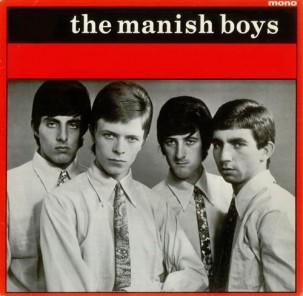
Woolf Byrne – Baritone Saxophonist in Manish Boys
Photo: Unknown photographer / archival publicity image (editorial use)
Woolf Byrne was a British musician who played baritone saxophone in The Manish Boys, one of David Bowie’s key mid-1960s rhythm-and-blues groups.
During this period Bowie was still billed as Davy Jones and was searching for a tougher, more credible R&B identity. Byrne’s baritone saxophone formed part of the brass-driven sound that gave The Manish Boys their raw club impact.
- Role: Baritone saxophone
- Band: The Manish Boys
- Active with Bowie: 1964–1965
- Bowie connection: Mid-1960s R&B band member
- Known recording: I Pity the Fool / Take My Tip
The Manish Boys and Bowie’s early R&B phase
The Manish Boys were already active before Bowie joined them in 1964. For Bowie, the group represented a clear stylistic move away from lighter beat-pop toward a harder rhythm-and-blues sound shaped by American blues, soul and London’s mod scene.
This was an important apprenticeship period. Bowie was learning how arrangement, stage attitude and musical identity could work together, even before he had discovered the theatrical personas that would later define him.
Woolf Byrne’s baritone sax role
As the band’s baritone saxophonist, Woolf Byrne contributed to the low-register brass texture that helped define The Manish Boys’ R&B-oriented sound. The baritone sax added weight, depth and grit to the group’s arrangements.
In a mid-1960s club setting, that kind of brass presence mattered. It gave the band more impact than a standard guitar-bass-drums line-up and connected them to the punchier sound of American rhythm and blues.
I Pity the Fool

Video: I Pity the Fool
-
Video: I Pity the Fool
Original released 5 March 1965 as The Manish Boys, Parlophone 5250 (alt. take issued without notice on Early On).
The Manish Boys – I Pity the Fool (1965)
The Manish Boys’ best-known recording is the 1965 (5 March) single I Pity the Fool, released with Bowie as lead vocalist. The track captured the group’s raw R&B direction and Bowie’s desire to be taken seriously inside a tougher musical scene.
The single was backed with Take My Tip, an early Bowie composition that already hints at his developing interest in character, social observation and sharp lyrical detail.
Together, the A- and B-side show Bowie balancing American blues devotion with the first signs of an individual songwriting voice — one reason this single holds such an important place in his early discography.
The John Lee Hooker connection
One remarkable detail in the Manish Boys story is the connection with American blues legend John Lee Hooker, who was associated with the I Pity the Fool session. For Bowie’s early discography, this created a striking link between his British R&B apprenticeship and the authentic blues tradition he and his peers admired.
That connection gives the recording extra historical weight. It shows how Bowie’s early musical education was not isolated from the wider blues world, but directly touched by it.
Beyond raw R&B
Although The Manish Boys were rooted in rhythm and blues, Bowie was already moving beyond straightforward imitation. Take My Tip suggests a young songwriter beginning to test his own voice within the language of mod-era R&B.
Byrne’s contribution belongs to this transitional sound: tough, brass-heavy and energetic, but also part of Bowie’s larger search for a musical identity that would not remain fixed for long.
Band evolution and Bowie’s departure
Bowie’s time with The Manish Boys was brief. By 1965 he was already moving forward, continuing the pattern that shaped his early career: joining groups, absorbing their lessons, then leaving once they could no longer contain his ambitions.
The R&B phase nevertheless mattered. It sharpened Bowie’s understanding of sound, arrangement and visual attitude, all of which would become central to his later reinventions.
Video – The Manish Boys
The Manish Boys – I Pity the Fool
This recording offers one of the clearest surviving examples of Bowie’s brief Manish Boys period: forceful, blues-rooted and far removed from the art-rock identity he would later develop.
Heard today, it captures Bowie at a formative stage — still learning from existing R&B traditions, but already pushing toward something more individual.
Place within Bowie’s universe
Within David Bowie’s extended creative universe, Woolf Byrne represents the hard-edged R&B apprenticeship phase: the moment Bowie stepped into a louder, brass-powered world and learned how sound, stance and scene could accelerate reinvention.
Byrne may remain an obscure name in Bowie history, but his role in The Manish Boys places him inside one of the crucial early formations through which Bowie learned what kind of artist he did — and did not — want to become.