
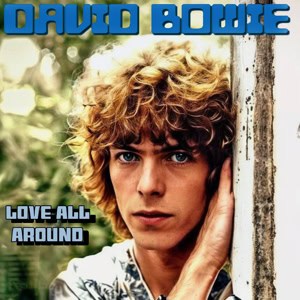
David Bowie – Beckenham Free Festival (1969)
On August 16, 1969, David Bowie played a central role in organizing and performing at the now-legendary Beckenham Free Festival, held at the bandstand in Croydon Road Recreation Ground in Beckenham, London.
Although only a few hundred people attended, the event has since become one of the most important early milestones in Bowie’s career. It represented his artistic vision in action during the Beckenham Arts Lab period — a time when he was experimenting with music, theatre, and community-driven creativity.
The atmosphere and experience of that day would later be immortalized in his song “Memory of a Free Festival”.
- Name: David Bowie (David Robert Jones)
- Date of birth: 8 January 1947
- Date of death: 10 January 2016
- Role: Organizer, performer, compère
- Period: Beckenham Arts Lab era (1968–1969)
The origins of the festival
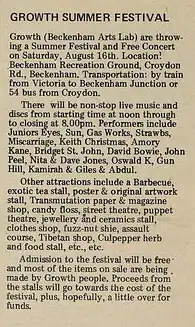
The Beckenham Free Festival was organised by members of the Beckenham Arts Lab, a creative collective that brought together music, poetry, theatre, and experimental art. Bowie was one of its key driving forces.
The aim was to create an open, free event that reflected the ideals of the late-1960s counterculture: creativity, freedom of expression, and community. It was also intended to promote the Arts Lab and its activities in Beckenham.
The event took place outdoors at the park’s Edwardian bandstand and ran from midday until the evening.
Original announcement and flyer

A small-scale counterpart to Woodstock
Remarkably, the festival took place during the same weekend as the famous Woodstock Festival in the United States. While Woodstock became a global cultural landmark, Beckenham remained a modest, local gathering.
Nevertheless, it embodied similar ideals: peace, music, and communal experience. Visitors enjoyed not only performances but also informal activities, art, and a relaxed festival atmosphere.
Bowie’s role: organiser and performer
David Bowie was deeply involved in every aspect of the event. He acted as compère (host), introduced performers, and performed his own set — mostly solo, sometimes accompanied by musicians such as Tony Visconti.
His performance included early versions of songs that would soon appear on the Space Oddity album, such as:
- Space Oddity
- Janine
- Wild Eyed Boy from Freecloud
- An Occasional Dream
These performances capture Bowie at a transitional moment — moving away from folk influences toward a more theatrical and experimental style.
Personal circumstances: a darker reality
Despite the festival’s idealistic atmosphere, Bowie himself was going through a deeply emotional period. His father had died on August 5, just eleven days before the event, and the funeral had taken place only five days earlier.
Witnesses recalled that Bowie was distant and withdrawn throughout the day. Although he performed professionally, he spoke little and did not attend the post-festival celebrations.
This contrast between the joyful surroundings and Bowie’s internal state adds a powerful emotional layer to the story of the festival.
The atmosphere of the day
The Beckenham Free Festival was defined by its simplicity and warmth:
- Good weather and a relaxed environment
- A small audience of a few hundred people
- Music, art, and informal performances
- No reported incidents or disturbances
It felt less like a commercial festival and more like a communal gathering — a brief moment of idealism captured in real life.
“Memory of a Free Festival” – the musical legacy
Shortly after the event, Bowie wrote “Memory of a Free Festival”, which appeared on his 1969 album Space Oddity.
The song was directly inspired by the festival and serves as a reflective, almost dreamlike reconstruction of the experience.
Interestingly, Bowie later admitted that he did not fully enjoy the day itself — yet he transformed it into something optimistic and communal in his music.
Historical significance
Although small in scale, the Beckenham Free Festival holds an important place in Bowie’s history:
- It demonstrates his role as a cultural organiser, not just a performer
- It marks a key transition period before his breakthrough
- It directly inspired one of his earliest significant compositions
The bandstand where Bowie performed is now known as the “Bowie Bandstand” and has been officially recognised as a heritage site.
YouTube – context and legacy
Memory of a Free Festival – inspired by the Beckenham Free Festival, 1969