
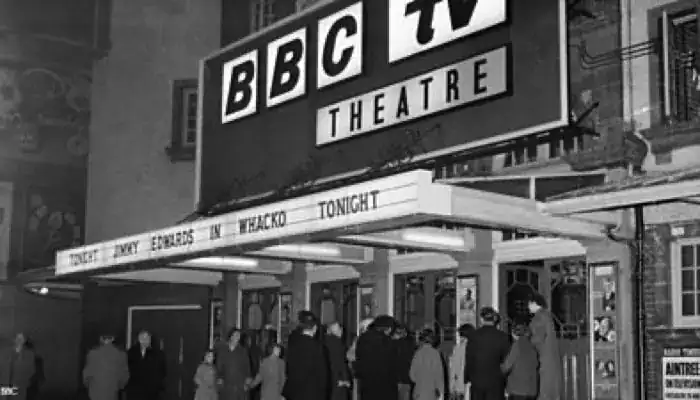
David Bowie – BBC Sessions (1967–1971)
Photo: Unknown photographer / Wikimedia Commons / CC BY-SA 4.0 (editorial use)
The BBC sessions between 1967 and 1971 played a vital role in David Bowie’s early development, providing a platform where he could perform, experiment and reach a wider audience. These recordings captured Bowie at a moment of transformation, before his global breakthrough.
Broadcast on influential programs such as Top Gear and other BBC radio shows, these sessions often featured early or alternative versions of songs, offering insight into Bowie’s evolving sound and artistic direction.
- Location: BBC Studios, London (Maida Vale & Paris Theatre)
- Period: 1967–1971
- Type: Radio sessions / live recordings
- Bowie connection: Early performances and exposure via BBC
The role of the BBC
In the late 1960s, the BBC played a central role in shaping the British music landscape. Radio sessions offered artists a unique opportunity to reach listeners across the country, often presenting music in a raw and immediate form.
For David Bowie, these sessions were essential. At a time when chart success was still limited, the BBC provided visibility and credibility, helping him build an audience.
Early performances and experimentation
Bowie’s BBC sessions reveal an artist in constant evolution. Songs were frequently performed in different arrangements, reflecting his willingness to experiment and refine his material.
These recordings often differ significantly from their studio counterparts, offering a more intimate and spontaneous perspective on his work.
Programs and exposure
Appearances on shows like Top Gear introduced Bowie to a broader audience. Hosted by influential figures such as John Peel, these programs were known for supporting innovative and emerging artists.
Through these broadcasts, Bowie began to establish himself as a distinctive voice within the British music scene.
Developing a sound
The BBC sessions document Bowie’s transition from folk-inspired material to a more expansive and experimental style. Elements of theatricality, narrative and character began to emerge more clearly in his performances.
This period laid the groundwork for the breakthrough that would come with Space Oddity and, later, the Ziggy Stardust era.
Video
Important places in the early life of David Bowie
Archival importance
Today, the BBC sessions are considered invaluable historical recordings. They provide insight into Bowie’s creative process, capturing moments that were never intended for commercial release.
These sessions allow listeners to hear Bowie’s development in real time, highlighting his adaptability and artistic curiosity.
From radio to global recognition
The exposure gained through the BBC helped prepare Bowie for wider success. By the early 1970s, he had developed both the material and the confidence needed to reach a global audience.
The BBC sessions stand as a crucial stepping stone in this journey.
Place within Bowie’s development
Within the broader context of David Bowie’s career, the BBC sessions represent a bridge between obscurity and recognition. They document the formative years in which Bowie’s identity began to take shape.
These recordings remain a testament to his early creativity and the importance of broadcast media in his rise to prominence.