
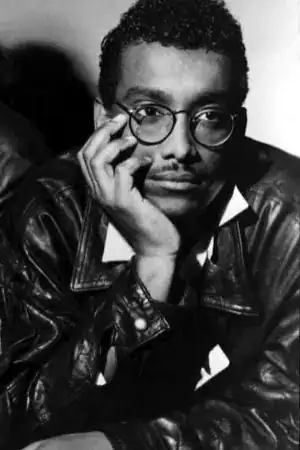
Tony Thompson – Rhythmic Precision on “Without You” (1983)
Photo: Unknown photographer / Wikimedia Commons / CC BY-SA 3.0 — Wikimedia file page
Tony Thompson (21 November 1954 – 12 November 2003) was the powerhouse drummer best known for his work with Chic. In 1983, he played a quietly decisive role in shaping the rhythmic and emotional framework of David Bowie’s album Let’s Dance.
His drumming on “Without You” demonstrates how restraint, control, and timing can carry as much expressive weight as virtuosity.
- Name: Tony Thompson
- Born: 21 November 1954 (New York City, USA)
- Died: 12 November 2003 (New York City, USA)
- Role: Drummer
- With Bowie: 1983
- Key work: “Without You” – Let’s Dance
- Also known for: Chic
The Let’s Dance context
By 1983, Bowie was deliberately reshaping his artistic direction. After years of experimentation and conceptual density, he sought clarity and accessibility without abandoning musical sophistication.
Producer Nile Rodgers assembled a rhythm section defined by absolute discipline. Tony Thompson’s drumming became a foundational element in achieving that balance.
Drumming as emotional architecture
On “Without You”, Thompson avoids the aggressive attack often associated with his Chic work. Instead, he delivers a measured, understated performance that allows the song to unfold gradually.
His use of dynamics — soft accents, controlled fills, and steady pulse — creates a rhythmic environment that supports Bowie’s vulnerable vocal delivery.
Interaction with Bernard Edwards and Stevie Ray Vaughan
Thompson’s drumming forms a perfectly aligned triad with Bernard Edwards’ bass and Stevie Ray Vaughan’s guitar.
The groove feels organic yet meticulously controlled, built on consistency rather than excess.
Discipline over display
Thompson was fully capable of dominating a track, but “Without You” required restraint. His performance reflects a deep understanding of when not to play.
This discipline mirrors Bowie’s broader artistic goals for the album.
Behind the scenes professionalism
Thompson’s reliability and musical intelligence made him an anchor during the sessions.
Bowie consistently gravitated toward collaborators who combined technical excellence with emotional awareness.
Impact and legacy
Tony Thompson’s contribution helped define the rhythmic language of Bowie’s most commercially successful era.
His work on “Without You” remains a masterclass in how rhythmic sensitivity can elevate a song from competent to quietly profound.
Tony Thompson in Bowie’s collaborative universe
Within Bowie’s constellation of collaborators, Thompson stands as a model of musical discipline — a drummer who understood that emotional storytelling sometimes requires stepping back rather than stepping forward.
His contribution endures as an essential, if understated, part of Bowie’s 1980s transformation.