
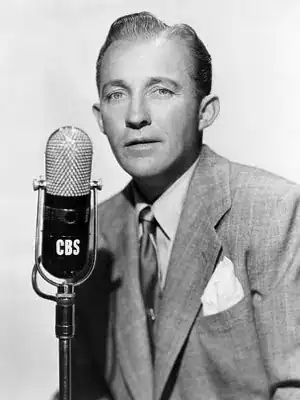
David Bowie & Bing Crosby – “Peace on Earth / Little Drummer Boy” (1977)
Photo: Unknown photographer / Wikimedia Commons / Public Domain (editorial use)
The duet between David Bowie and Bing Crosby on “Peace on Earth / Little Drummer Boy” stands as one of the most unexpected, improbable, and enduring collaborations in television and music history. Recorded in September 1977 for Crosby’s final television special, the performance united two artists from entirely different cultural universes.
What initially appeared to be a novelty pairing evolved into a moment of genuine artistic synthesis — one that transcended generational divides and redefined the possibilities of televised collaboration.
The Television Context
The performance was recorded for Bing Crosby’s Merrie Olde Christmas, a traditional holiday television special rooted in mid-20th-century variety show conventions. Bowie, at the time immersed in the experimental Berlin period, represented a radically modern presence.
On paper, the pairing made little sense. In practice, it proved quietly revelatory.
Reworking “The Little Drummer Boy”
Bowie reportedly objected to singing “The Little Drummer Boy” in its original form, finding the song musically restrictive. Rather than decline participation, he proposed writing a new counter-melody.
The result was “Peace on Earth” — a newly composed lyrical and melodic line that runs parallel to Crosby’s traditional delivery.
Musical Structure and Dialogue
The duet functions as a conversation rather than a harmony exercise. Crosby anchors the performance with warmth, stability, and tradition, while Bowie introduces reflection, melancholy, and contemporary restraint.
Their voices never compete. Instead, they coexist, representing different emotional registers of the same cultural moment.
Generational Contrast
At the time of recording, Bing Crosby was a symbol of pre-rock popular culture — the embodiment of mid-century American entertainment values.
Bowie, by contrast, stood at the forefront of postmodern identity, experimentation, and artistic self-reinvention. The duet places these perspectives side by side without irony or conflict.
Visual Presentation
The staging is deliberately understated. Seated beside a fireplace, the two artists engage in casual conversation before the song begins, reinforcing a sense of personal exchange rather than spectacle.
Bowie’s subdued appearance and controlled delivery contrast sharply with his contemporary stage personas, highlighting his adaptability as a performer.
Broadcast and Immediate Reception
The program aired in November 1977, shortly after Crosby’s death. As a result, the duet acquired an unintended sense of finality and reflection.
Audience reaction was initially mixed, but the performance gradually gained recognition as a singular cultural artifact.
Longevity and Reassessment
Over time, “Peace on Earth / Little Drummer Boy” became a recurring presence in seasonal broadcasting, eventually entering the canon of classic Christmas music.
What once seemed anomalous is now widely regarded as timeless.
Bowie’s Role in the Collaboration
Bowie’s contribution was not merely vocal. His insistence on re-imagining the song demonstrated his commitment to artistic integrity, even within rigid broadcast formats.
The duet reveals Bowie’s respect for tradition — not through imitation, but through thoughtful reinterpretation.
Bing Crosby’s Final Television Moment
The performance is often remembered as one of Bing Crosby’s final major public appearances. Its quiet dignity and emotional balance contribute to its enduring power.
Rather than serving as a farewell, the duet functions as a bridge between eras.
Cultural Legacy
Today, the Bowie–Crosby duet stands as a rare example of cross-generational collaboration achieved without compromise or parody.
It remains a testament to the idea that musical dialogue can transcend time, fashion, and expectation.