
David Bowie – Station to Station Tour (1976)
In 1976, David Bowie entered one of the most intense and austere phases of his career with the worldwide Station to Station Tour. Appearing as the cold, aristocratic Thin White Duke, Bowie delivered ritualistic, disciplined performances that rejected glam excess in favor of emotional distance, stark lighting and machine-like musical precision.
The tour followed the release of Station to Station, an album that fused European experimentalism with American funk, soul and early electronic minimalism. On stage, Bowie’s most technically exact band to date executed this material with almost military focus.
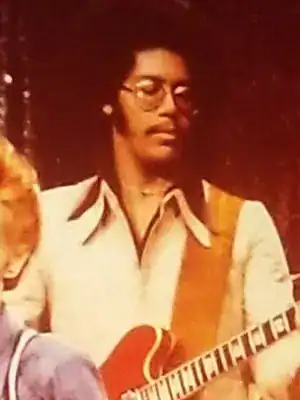
Although no major guest stars appeared during this tour, its historic importance lies in the **internal power of the band itself** — especially the role played by guitarist and musical director Carlos Alomar.
Quick Facts
| Year | 1976 |
| Main Artist | David Bowie |
| Tour | Station to Station / Isolar Tour |
| Persona | The Thin White Duke |
| Style | Art rock, funk, soul, European experimental |
| Key Musical Architect | Carlos Alomar |
The Touring Band & Vocal Structure
The 1976 touring band functioned as a single, tightly locked unit. Every musical component — guitars, bass, keyboards, drums and backing vocals — served a unified architectural purpose rather than individual spotlight moments.
Internal backing vocals on songs like Stay, Golden Years, Word on a Wing and sections of Station to Station were restrained, ghost-like and atmospheric, reinforcing the cold emotional world of the Thin White Duke.
Psychological Context of the Era
The Station to Station period unfolded during one of the darkest phases of Bowie’s life. Severe cocaine addiction, paranoia, exhaustion and emotional isolation dominated his private existence. These conditions directly shaped the music and the rigid, emotionally distant stage character.
Audiences were confronted with deliberately anti-entertainment performances: no costume changes, no casual interaction, no glamour — only posture, sound, light and control.
Carlos Alomar – Bowie’s Longest-Serving Musical Partner (1976–2004)
Carlos Alomar was not merely a guitarist in David Bowie’s band — he was the musical backbone, rhythmic architect and most enduring collaborator of Bowie’s entire live career. Their partnership officially began in the mid-1970s but extended across nearly three decades, from the Station to Station era through to Bowie’s final large-scale touring period in 2004.
By the time of the 1976 Isolar Tour, Alomar had already become Bowie’s trusted musical anchor. Trained in soul, funk, R&B and Latin rhythm traditions, Alomar introduced an advanced sense of synchronised groove and internal timing into Bowie’s increasingly European, minimalistic direction.
Where earlier Bowie guitarists such as Mick Ronson were explosive and theatrical, Alomar’s power came from discipline, repetition and precision. His clipped funk-style phrasing and sharp rhythmic attack powered songs like: Golden Years, Stay, Fame and vast sections of Station to Station itself.
During the 1976 tour, Bowie was often barely functional behind the scenes. It was Alomar who kept the musical structure together night after night, acting as both on-stage leader and off-stage stabilizing force. Many insiders consider him the unofficial musical director of the Isolar band.
Alomar’s influence expanded dramatically during the Berlin Trilogy era (Low, “Heroes”, Lodger), where he adapted his funk-based guitar instincts to colder, electronic soundscapes without ever losing rhythmic authority.
In the 1980s, Alomar became even more crucial as Bowie moved into his commercially dominant phase. He co-wrote Fame, one of the biggest hits of Bowie’s career, and remained Bowie’s chief live guitarist throughout the Serious Moonlight Tour, Glass Spider Tour and numerous world tours.
Across the 1990s and into the early 2000s — including the Reality Tour (2003–2004) — Carlos Alomar remained Bowie’s central musical foundation on stage. By that point, his role had evolved from guitarist into full-scale musical co-director and arranger.
When Bowie finally stepped away from large-scale touring in 2004, Carlos Alomar closed a partnership that had lasted nearly 30 years. No other musician in Bowie’s history maintained such a long, continuous live presence.
Today, Alomar is universally recognised as the stabilizing rhythmic mind behind Bowie’s most disciplined live eras — from the icy control of the Thin White Duke to the global stadium power of Bowie’s later tours.
Signature Live Songs (1976)
- Station to Station
- Golden Years
- Stay
- Word on a Wing
- TVC 15
- Rebel Rebel (re-interpreted)
Live Performances & Locations
- 1976 – United States – Isolar Tour (North America)
- 1976 – Europe – Extended European leg
- 1976 – Nassau Coliseum, New York – Legendary recorded performance
Surviving Audio & Video
The Station to Station tour survives in outstanding quality through the official album Live Nassau Coliseum ’76, extensive radio broadcasts and professional television footage.
Station to Station – Live Nassau Coliseum (1976)
David Bowie “Golden Years” Guitar Riffs By Earl Slick & Carlos Alomar
Historical Importance
The Station to Station tour is now regarded as Bowie’s most disciplined and psychologically intense live era. The Thin White Duke persona permanently altered the visual and psychological language of rock performance.
At the heart of this transformation stood Carlos Alomar, whose rhythmic architecture and long-term musical leadership formed the invisible backbone of Bowie’s live reinvention from 1976 until the final tours of 2004.
← Back to Bowie Live Collaborations