
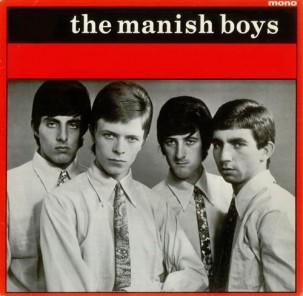
Woolf Byrne
Photo: Unknown photographer / Wikimedia Commons / Unknown — Unknown Wikimedia file page
Woolf Byrne was a British musician who played baritone saxophone in The Manish Boys, one of David Bowie’s most important mid-1960s groups during his transition from beat-pop toward a tougher rhythm-and-blues identity.
The Manish Boys era placed Bowie (then billed as Davy Jones) inside a louder, more aggressive mod/R&B circuit, where saxophone-driven arrangements were central to impact. Byrne’s role contributed to that raw, brass-heavy sound.
- Role: Baritone saxophone
- Band: The Manish Boys
- Active with Bowie: 1965–1966
- Bowie connection: Mid-1960s R&B band member
The Manish Boys and Bowie’s early R&B phase
Formed in 1965, The Manish Boys represented a clear stylistic move away from Bowie’s earlier beat-group period. The band leaned into American rhythm and blues, soul inflections and a more confrontational stage attitude aligned with London’s mod scene.
In this setting, saxophones were not decoration — they were a core engine of volume, swagger and drive, giving the band a heavier presence than many guitar-only groups.
Woolf Byrne’s baritone sax role
As baritone saxophonist, Woolf Byrne provided low-register brass power that thickened the band’s sound. The instrument’s weight helped anchor arrangements and intensified the group’s R&B feel.
In live clubs, that extra bottom-end and bite mattered: it cut through the room and supported Bowie’s developing frontman confidence.
Shared recordings
The Manish Boys’ best-known recording is the 1965 single I Pity the Fool, a statement of intent that captured the group’s raw R&B direction and Bowie’s hunger to be taken seriously in a tougher scene.
Band evolution and Bowie’s departure
Bowie left The Manish Boys in early 1966, continuing his pattern of outgrowing fixed band identities. The R&B phase nevertheless mattered: it sharpened his understanding of arrangement, attitude and the power of instrumentation in shaping image.
Byrne’s presence belongs to that crucial learning period where Bowie absorbed influences he would later transform into something uniquely his own.
Place within Bowie’s universe
Within David Bowie’s extended creative universe, Woolf Byrne represents the hard-edged R&B apprenticeship phase — the moment Bowie stepped into a louder, brass-powered world and learned how sound, stance and scene could accelerate reinvention.