
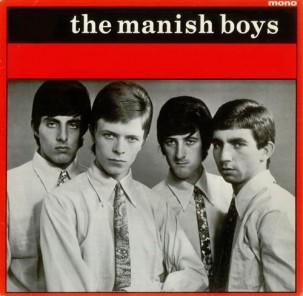
Mick White
Photo: Unknown photographer / Wikimedia Commons / >>” target=”_blank” rel=”noopener”> Wikimedia file page
Mick White (also known as Michael Whitehead) was the drummer in The Manish Boys, one of David Bowie’s most important mid-1960s bands.
As part of the group’s rhythm section, White helped define the driving, rhythm-and-blues-based sound that marked Bowie’s decisive break from earlier beat-pop conventions.
- Real name: Michael Whitehead
- Role: Drummer
- Band: The Manish Boys
- Active with Bowie: 1965–1966
The Manish Boys and the R&B turn
The Manish Boys emerged in 1965 as a clear departure from David Bowie’s earlier beat-oriented groups.
Drawing heavily on American rhythm & blues and soul, the band projected a louder, more aggressive identity suited to London’s mod club circuit.
Mick White’s drumming style
Mick White’s drumming emphasised drive and momentum rather than ornamentation, reinforcing the band’s raw, club-focused sound.
His playing locked tightly with bass and saxophone, creating a solid platform for Bowie’s increasingly assertive vocal performances.
David Bowie as Davy Jones
During this period, Bowie was still performing under the name Davy Jones, actively reshaping his image and vocal delivery.
The Manish Boys provided a context in which Bowie could test a tougher, more confrontational stage persona.
Shared recordings
The band released the single I Pity the Fool in 1965, a recording that captured their R&B direction and Bowie’s growing confidence as a frontman.
The track is notable for featuring Jimmy Page on lead guitar, underscoring the band’s ambition and professional aspirations.
End of the collaboration
Bowie left The Manish Boys in early 1966 in pursuit of greater creative control and a more individual artistic path.
Mick White’s contribution remains part of a crucial apprenticeship phase that shaped Bowie’s understanding of rhythm, power and live impact.
Place within Bowie’s universe
Within David Bowie’s extended creative universe, Mick White represents the rhythmic backbone of Bowie’s mid-1960s transformation toward a more forceful, R&B-driven sound.
His role belongs to the formative period where Bowie learned how rhythm and attitude could redefine artistic direction.