
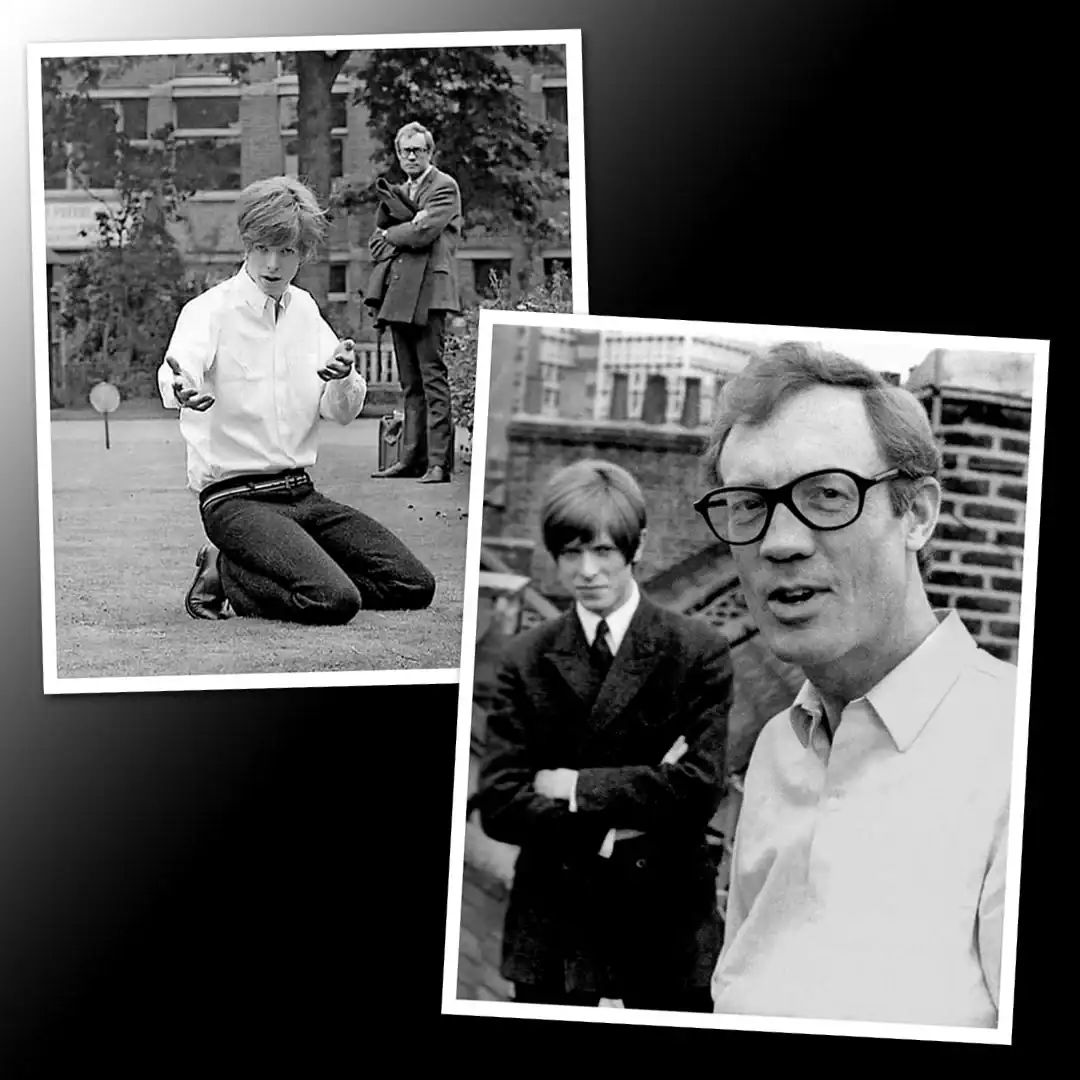
Kenneth Pitt
Photo: Unknown photographer / davidbowie.com / Unknown — DavidBowie.com file page
Kenneth Pitt was an English artist manager who served as David Bowie’s first professional manager during the mid-1960s. His involvement marked Bowie’s earliest structured entry into the music industry.
Although their collaboration was short-lived, Pitt’s role was significant in positioning Bowie as a serious and ambitious young artist at a formative stage of his career.
- Born: England
- Role: Artist manager
- Era: Mid-1960s
- Bowie connection: First professional manager
Early career in artist management
Kenneth Pitt came from a background in arts management and representation, working primarily with stage and music performers during the 1960s.
His approach emphasised presentation, professionalism and long-term artistic development rather than short-term commercial success.
Discovering David Bowie
Pitt encountered David Bowie at a time when Bowie was still searching for a stable musical identity, experimenting with styles ranging from mod pop to theatrical songwriting.
Recognising Bowie’s potential, Pitt sought to guide him toward a more distinctive and mature artistic direction.
Shaping an early image
During Pitt’s management period, Bowie began to adopt a more stylised image, drawing inspiration from theatre, mime and narrative songwriting.
Pitt supported these ambitions, encouraging Bowie’s interest in performance as an integrated visual and musical experience.
Limitations and separation
Despite shared artistic goals, Pitt’s managerial style proved increasingly cautious compared to Bowie’s growing appetite for experimentation and risk.
The partnership ended amicably, allowing Bowie to pursue a more aggressive and unconventional career trajectory.
Place within Bowie’s universe
Within David Bowie’s extended creative universe, Kenneth Pitt represents the transitional moment between amateur ambition and professional artistry.
His early guidance helped establish the foundation upon which Bowie would later build his revolutionary career.