
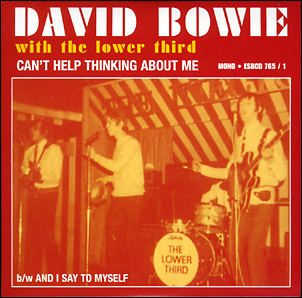
Dennis Taylor (The Lower Third)
Photo: Unknown photographer / Wikimedia Commons / Unknown —
Dennis Taylor was the drummer for The Lower Third, the London mod/R&B group led by David Bowie during a crucial phase of his early career in 1965.
The Lower Third marked Bowie’s move away from straightforward rhythm & blues toward a sharper, more self-directed mod sound, with original material beginning to replace covers.
- Name: Dennis Taylor
- Band: The Lower Third
- Role: Drums
- With Bowie: 1965
- Era: Mod / post-R&B transition
- Key release: “You’ve Got a Habit of Leaving” (1965)
Where Dennis Taylor fits in Bowie’s timeline
Dennis Taylor belongs to Bowie’s second major band phase, following the R&B-driven King Bees and Manish Boys. By the time The Lower Third formed, Bowie was actively reshaping himself as a modern mod frontman rather than a blues shouter.
This period is essential to understanding Bowie’s development: it is the moment when songwriting, image, and ambition begin to align.
The Lower Third: a step toward originality
The Lower Third were a tight, image-conscious mod band operating in the mid-1960s London club circuit. Unlike Bowie’s earlier groups, the band increasingly performed Bowie’s own compositions.
Dennis Taylor’s drumming anchored the group’s crisp, aggressive sound, supporting sharp guitar lines and Bowie’s more assertive vocal delivery.
Key recording: “You’ve Got a Habit of Leaving”
The Lower Third recorded and released the single “You’ve Got a Habit of Leaving” in 1965, one of the earliest records to showcase Bowie as a confident songwriter.
Although the single failed to chart, it is historically significant: it represents Bowie asserting artistic control rather than adapting himself to an existing band identity.
Why the band dissolved
Despite growing confidence and sharper material, The Lower Third struggled to gain commercial traction. As with Bowie’s previous groups, frustration over progress and direction led to the band’s dissolution.
Bowie soon moved on again—this time toward even more radical reinvention, passing through The Buzz and eventually into his solo recording career.
Historical importance
Dennis Taylor’s role may appear modest in hindsight, but it sits at a critical turning point. The Lower Third represent Bowie learning how to lead a band, not merely sing in one.
Without this phase, the leap to Bowie’s later solo identity would have been far less assured.