
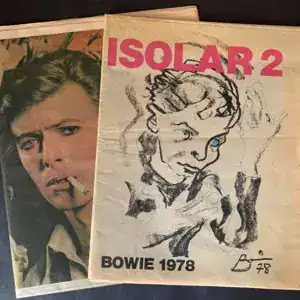
Eric Barrett – Tour Manager and Lighting Designer on David Bowie’s Isolar II
Eric Barrett was a key behind-the-scenes figure in David Bowie’s late-1970s live world, serving as both tour manager and lighting designer during the Isolar II Tour in 1978.
While rarely mentioned outside specialist circles, Barrett’s dual role placed him at the centre of one of Bowie’s most ambitious and visually disciplined touring productions.
- Name: Eric Barrett
- Born: Unknown
- Died: Unknown
- Role: Tour manager; lighting designer
- Bowie link: Isolar II Tour (1978)
- Core idea: Precision, control, and atmosphere in live performance
The Isolar II Tour (1978)
The Isolar II Tour followed Bowie’s Berlin-period albums (Low and “Heroes”) and represented a sharp break from the flamboyance of earlier tours. The shows were controlled, austere, and often emotionally distant.
In this environment, lighting was not decoration but structure. Eric Barrett’s work helped define the stark visual language that matched Bowie’s increasingly introspective and European-influenced music.
Tour manager and lighting designer: a rare combination
Barrett’s position was unusual in that he combined two demanding roles. As tour manager, he oversaw logistics, scheduling, personnel, and the daily functioning of the tour. As lighting designer, he shaped the audience’s visual experience.
This dual responsibility ensured that artistic intent and practical execution remained closely aligned — a crucial factor on a tour where precision and consistency were essential.
Lighting as emotional architecture
The Isolar II shows relied on restrained colour palettes, strong contrasts, and carefully timed cues. Lighting was used to isolate Bowie on stage, reinforcing themes of alienation, control, and emotional distance.
Barrett’s designs supported Bowie’s move away from spectacle and toward atmosphere — allowing songs to breathe within carefully framed spaces of light.
Working with Bowie’s late-1970s aesthetic
By 1978, Bowie was highly focused on discipline and structure. Excess had been stripped away in favour of clarity. Barrett’s work fitted this philosophy, avoiding flourish in favour of intent.
The lighting design became an extension of Bowie’s body language on stage: still, deliberate, and emotionally charged without overt drama.
An unseen but essential collaborator
Figures like Eric Barrett rarely appear in front-facing histories, yet tours of this scale depend on such individuals. Without disciplined management and coherent visual design, the Isolar II Tour could not have achieved its distinctive impact.
In Bowie’s extended creative universe, Barrett represents the vital technical collaborators who translate artistic vision into lived experience — night after night, city after city.