
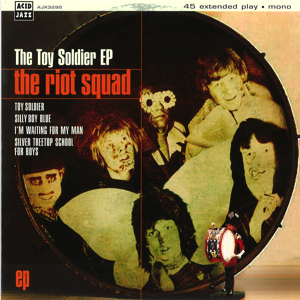
Mick Wills (The Buzz & The Riot Squad)
Mick Wills was a British bassist who worked with David Bowie during two closely linked phases of his mid-1960s career: first in The Buzz (1966) and later in The Riot Squad (1967).
His presence across both bands places him at a crucial point in Bowie’s development, when Bowie was abandoning the mod-band format and moving toward a fully independent solo identity.
- Name: Mick Wills
- Role: Bass guitar
- Bands: The Buzz; The Riot Squad
- With Bowie: 1966–1967
- Era: Post-mod / pre–solo breakthrough
- Context: Bowie’s final band experiments
Where Mick Wills fits in Bowie’s timeline
Mick Wills appears during a period of instability and rapid change in Bowie’s career. By 1966, Bowie had left the mod-focused Lower Third behind and was searching for a new direction that could sustain a long-term career.
The Buzz and The Riot Squad were short-lived projects, but together they represent Bowie’s final attempts to operate within a conventional band structure.
The Buzz (1966)
The Buzz formed after the collapse of The Lower Third and leaned toward a more pop-oriented, contemporary sound, in step with the rapidly evolving London scene. Bowie fronted the band while continuing to test new songwriting ideas.
Mick Wills’ bass playing helped provide stability in a group that was otherwise transitional and experimental in nature.
The Riot Squad (1967)
In 1967, Bowie moved on to The Riot Squad, a heavier, guitar-driven band with proto-psychedelic and hard-rock leanings. Wills carried over into this lineup, maintaining continuity between Bowie’s last two bands.
The Riot Squad’s tougher sound contrasted sharply with Bowie’s earlier R&B and mod work, reflecting both changing musical fashions and Bowie’s growing restlessness.
Bowie at the point of departure
Bowie’s time with The Riot Squad was brief, but decisive. He was already moving toward a solo recording contract and a more personal, conceptual approach to music.
The lessons learned in these bands—especially what Bowie did not want—would directly inform his next steps as a solo artist.
Historical importance
Mick Wills’ role may not be widely known, but it is structurally important. He was present at the moment when Bowie finally broke away from the idea of being “in a band” and began constructing a singular artistic identity.
Within a short time, this transition would lead to Bowie’s first solo album and, soon after, to the breakthrough of Space Oddity.
VIDEO: The Buzz & The Riot Squad

Video: Good Morning Girl

Video: Waiting for My Man
-
Video: Good Morning Girl
This is what I wished every DES mix sounded like, as it it were right off an original tape! I got lucky on this one, as the sound was already incredibly mixed. Great vocal from Bowie and his band The Buzz, released in April of 1966. This would have been about half a year before Bowie was signed to Deram, and started his upward journey through stardom that would remain for the rest of his life -
Video: Waiting for My Man
The Riot Squad - Waiting for My Man Ft David Bowie Follow Acid Jazz Records